
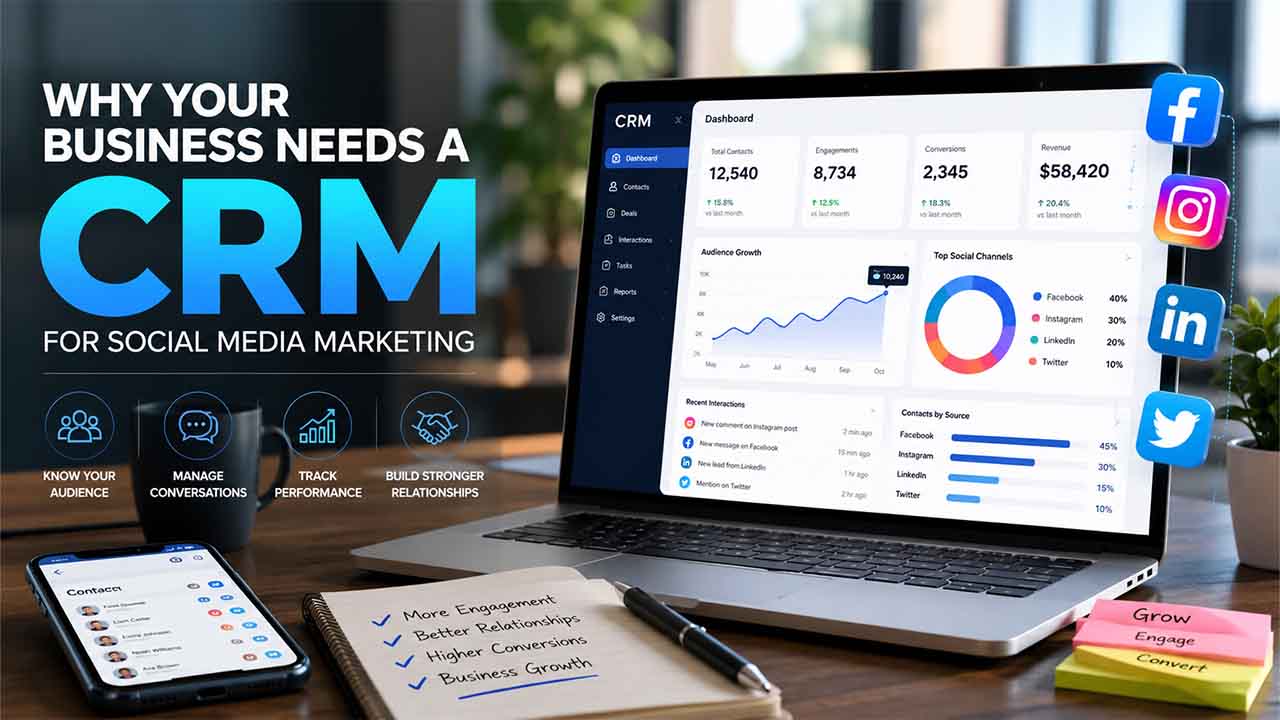

Social media has fundamentally changed how customers and businesses interact. With 5+ billion active users spread across platforms such as Instagram, Facebook, LinkedIn, and X (formerly Twitter), brands can no longer approach customer relationship management through disconnected tools, disorganized inboxes, and scattered spreadsheets. Customers appreciate customized communication, prompt responses, and smooth experiences, and they want to reach out through the platforms they use day to day. That is why we have a CRM for social media marketing that becomes useful.
Modern organizations require customer relationship management software that not only monitors customer data but also connects social media activity with it. This helps businesses convert comments, engagements, and mentions into actionable insights. A social media CRM closes the gap, enabling teams to deliver customized experiences at scale while also making sure that marketing, sales, and support remain completely aligned. Without the help of this connection, businesses can risk losing crucial leads and face disadvantages while handling customer relationships simply due to the lack of visibility into what is being said about them online.
What Is a CRM for Social Media Marketing?
A CRM for social media marketing, often known as a social CRM, is the tight integration between customer relationship management systems and social media platforms. Contrary to conventional CRM platforms that emphasize transactional data from phone calls or emails, a social media CRM captures interaction in real-time from platforms such as Instagram, Facebook, LinkedIn, and X and directly links them to customer profiles stored within the CRM.
This integration implies that when a customer tweets a complaint, leaves a comment on a Facebook post, or engages with a LinkedIn campaign, this interaction becomes categorized, logged, and made visible to the relevant team. It enables businesses to:
- Track brand mentions and customer conversations across distinct platforms
- Make the customer profiles more data-rich with social media engagement history.
- Transform social interactions into qualified support tickets and leads.
- Deliver contextually aware or timely responses without switching between different tools.
- Align sales, marketing, and customer service teams with a centralized view of every customer.
In simple terms, a CRM for social media marketing goes beyond monitoring impressions and likes. It converts each social touchpoint into valuable customer intelligence that leads to intelligent and data-driven decision-making across the organization.
How Is a Social CRM Different from Conventional CRM?
Having knowledge about the difference between conventional and social CRM aids businesses in selecting the right platform for their requirements.
A traditional CRM mainly depends on internal data, which includes support tickets, purchase history, and direct communications through email or phone. It is mainly a transaction-based and specialized tool to support customer service workflows, sales pipelines, and revenue forecasting. While it ensures a solid foundation for handling customer relationships, it is restricted visibility into how customers communicate about a brand and in public-centric digital spaces.
By contrast, social media CRM accesses publicly available social data, which includes comments, mentions, hashtags, and sentiment across platforms. Its focus remains on building relationships, social listening, community engagement, and brand monitoring. It complements the conventional CRM by adding a conversation-based and real-time layer to customer profiles. This is the one that represents not just what customers are purchasing, but what they say and feel about your business.
When they are combined, the two platforms create a complete picture of who your customers are, how they behave, and what they think about your brand. For businesses that depend heavily on social media marketing, this level of insight is crucial for fine-tuning strategy and enhancing outcomes.
Main Features to Look for in a Social CRM
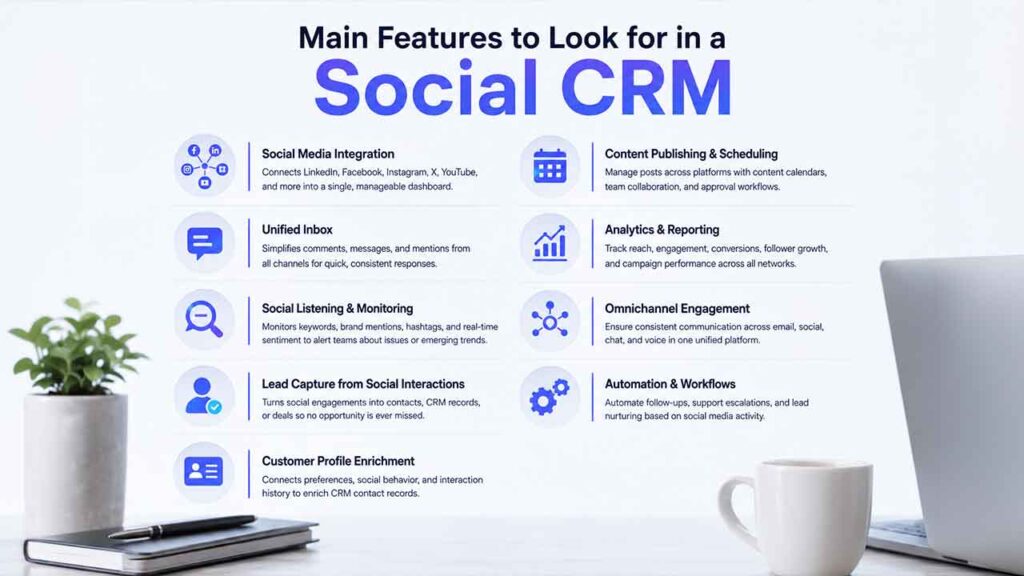
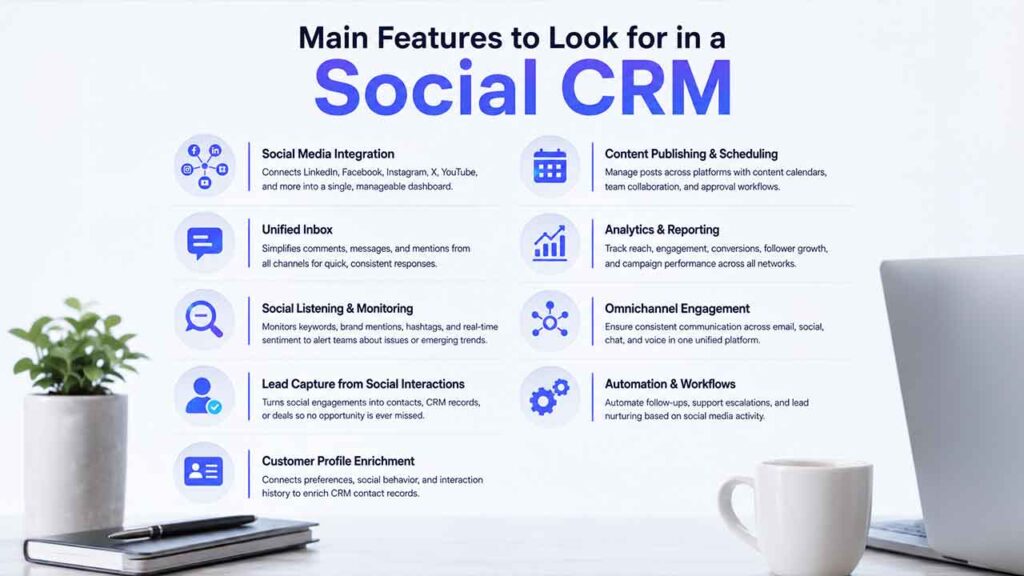
Assessing the features of a CRM before committing is extremely crucial. Not all CRM platforms for social media marketing are created equally. When assessing platforms, the feature set must match both the scale of your social media presence and the customer engagement strategy complexity. Look for the below-mentioned main capabilities:
- Social media integration: Connects LinkedIn, Facebook, Instagram, X, YouTube, and other solutions into a single and manageable dashboard. This removes the need to sign into numerous accounts.
- Unified inbox: Simplifies comments, messages, and mentions from all channels so teams can respond quickly and consistently.
- Social listening and monitoring: Monitors keywords, brand mentions, hashtags, and real-time customer sentiments, alerting teams to potential issues or emerging trends.
- Lead capture from social interactions: Transforms social engagements into contacts, CRM records, or deals so that no opportunity is ever missed.
- Customer profile enrichment: Connects preferences, social behavior, and interaction history to present CRM contact records for a complete customer view.
- Content publishing and scheduling: Handles posts across platforms with content calendars, team collaboration, and built-in approval workflows.
- Analytics and reporting: Track reach, engagement, conversions, follower growth, and campaign performance across all connected networks.
- Omnichannel engagement makes sure that communication is consistent across email, social, chat, and voice channels through one integrated platform.
- Automation and workflows: Execute follow-up actions like support escalations or lead nurturing sequences as per the social media activity.
Best CRM Solutions for Social Media Marketing
Numerous solutions stand apart when it comes to integrating CRM capabilities with social media management. The right option factors in your team size, your present stack of technology, and the social integration depth that your business needs. Here is a complete overview of the most broadly utilized options:
1. HubSpot CRM
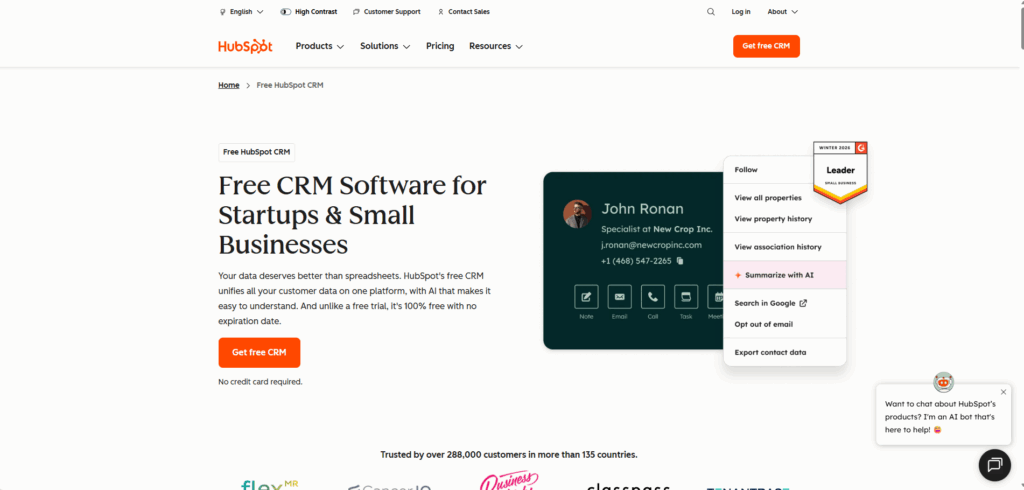
HubSpot is a prominent choice for small to mid-sized organizations implementing inbound marketing strategies. Its built-in social media management features enable teams to track brand mentions, schedule posts, and monitor social engagement directly within contact records. Social activity smoothly incorporates lead scoring, email campaigns, and automated workflows, making HubSpot a robust centralized solution for teams that want a centralized solution for their full-funnel marketing. Its free-tier and innovative interface also make it accessible for businesses that are just beginning with social CRM.
2. Zoho CRM with Zoho Social
Zoho provides native integration between social management tools and CRM, i.e., Zoho Social. This combination is specifically effective for teams that wish to convert social interactions into CRM leads without changing platforms. It provides support for multi-platform publishing across LinkedIn, Facebook, X, and Google Business Profile. Further capabilities comprise social listening, Canva integration for the creation of brand content, role-driven assignment of tasks for team collaboration, and Zoho Desk integration for transforming social messages into customer support tickets. For businesses that are cost-conscious and already existing within the Zoho environment, this is an extremely efficient choice.
3. OutRightCRM:
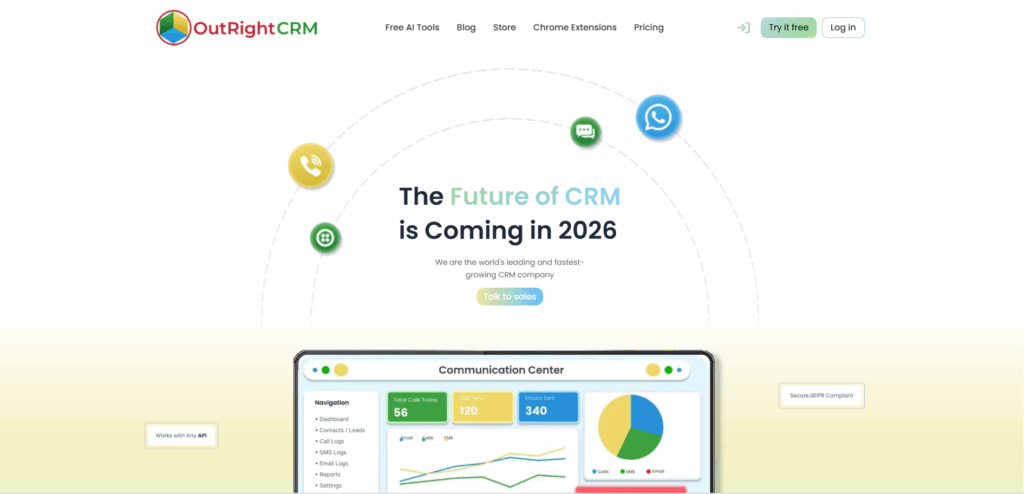
OutRightCRM is a powerful tool for social media marketing because of its omni-channel approach, integrated with a wide library of add-ons and plugins, including click-to-call through Twilio, SMS campaigns, and email-to-lead automation. For evolving businesses looking for an integration-rich and flexible CRM that scales along with social media strategy without going for costly and large-scale enterprise solutions. For more details, check out our Contact Us page.
4. Sprout Social
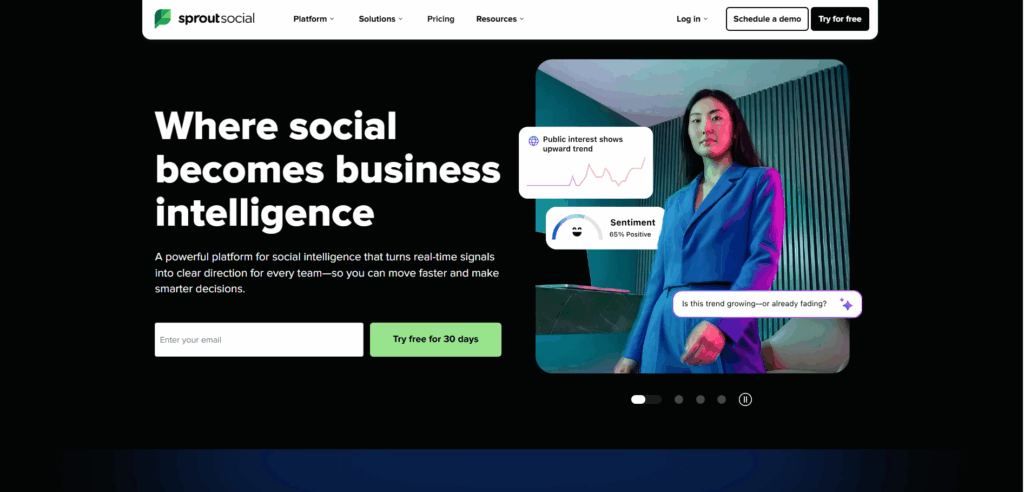
Sprout Social is a specially built social CRM platform that specializes in handling copious volumes of social interactions across numerous channels or brands. It's an intelligent and centralized inbox that routes all inbound comments, messages, and tags from each platform into a centralized view for quick triage and response. A visual content calendar, approval workflows, sophisticated social listening tools, and cross-network analytics make it a preferred option for enterprise marketing teams and agencies. Sprout incorporates numerous leading CRM solutions to directly synchronize social data with support and sales records, closing the loop between revenue and engagement.
5. Microsoft Dynamics 365
For businesses already working with a Microsoft environment, Dynamics 365 introduces social media management into the CRM via native marketing modules and Power Automate integrations. It is specifically well-suited for regulated industries like finance and healthcare that need governance workflows, audit trails, and content approval processes. Social activity is stored as Dataverse records, ensuring that everything is directly connected to the available accounts, contacts, and customer journey data. Teams that depend on Power BI for reporting can integrate social media engagement metrics into their wider business intelligence dashboards without any additional migration of data.
6. Agile CRM
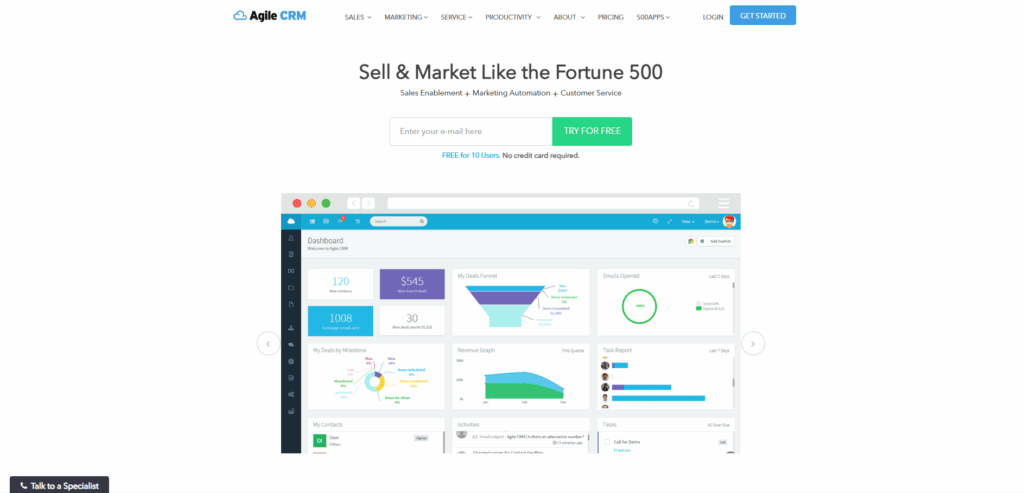
Agile CRM is a budget-based option for smaller teams that desire social CRM capabilities along with marketing, sales, and customer service platforms in a centralized platform. It provides social listening across LinkedIn, Facebook, and X. Furthermore, it also ensures contact enrichment from social profiles and engagement alerts for keywords and brand mentions, which are all accessible from a centralized dashboard. While it does not have the depth of enterprise platforms such as Dynamics 365 or Sprout Social, it ensures a profound entry point for small businesses looking to incorporate social media marketing into their customer relationship management without a larger investment.
Advantages of Utilizing a CRM for Social Media Marketing
Inclusion of a vertical CRM to manage your social media marketing strategy ensures trackable benefits that go beyond standard comment tracking or post scheduling. Here is how it generates accurate business value:
- Enhanced customer engagement: Respond to comments, mentions, and direct messages quickly with automated alerts and a simplified inbox, minimizing response times and enhancing satisfaction scores.
- Advanced lead generation: Recognize possible customers based on social media activity, such as engagement with your posts, following your brand, or mentioning appropriate keywords, and directly route them into your sales pipeline.
- Improved brand monitoring: Monitor real-time brand sentiment and address emerging or negative issues before they escalate into wider reputational issues.
- Data-driven marketing campaigns: Leverage social listening insights to comprehend pain points, customer preferences, and interests, then create personalized campaigns that align with specific audience segments.
- Cross-team alignment: Bring marketing, sales, and support into the same platform, removing silos of data and making sure that each team member has access to the same customer context.
- Actionable analytics: Track what is most significant, like sentiment trends, engagement rates, social ROI, and content performance, all from within the same reporting environment.
- Scalable customer support: Handle evolving volumes of social inquiries without elevating headcount by automating routine ticket creation and follow-up as per the predefined rules.
How to Select the Best Social CRM for Your Business?
With numerous strong options available, selecting the best CRM for social media marketing comes down to some practical considerations.
Begin by checking the size and structure of your team. Smaller businesses benefit a lot from platforms such as Agile CRM or HubSpot that are simple to set up and need minimum training. Larger businesses with multiple brands, complex workflows, or strict compliance needs will find great value in Microsoft Dynamics 365 or Sprout Social.
Next, consider your available technology stack. A social media CRM that natively integrates with your available tools, be it a marketing automation solution, an e-commerce platform, or a helpdesk solution, will deliver quicker value and need less personalization. Native integrations minimize the risk of data gaps and make sure that social media engagement data flows smoothly into the rest of your business processes.
Ultimately, assess analytics depth and offer reporting. The right social CRM platforms do not just display engagement numbers; they integrate social performance with business results such as customer retention, pipeline growth, and revenue attribution. This high visibility level is what separates a valuable platform from a genuinely strategic one.
Conclusion
A CRM for social media marketing is no longer an optional afterthought for businesses that wish to remain competitive. As customer conversations take place across social platforms, businesses that are unsuccessful in linking such interactions to their customer relationship management are leaving their crucial data and actual revenue opportunities on the table.
From tracking brand sentiment and capturing leads to allowing smooth omnichannel support and developing data-based campaigns, the best social media CRM changes how a business interacts with its audience at each stage of the customer journey.
Irrespective of whether you are a small business needing an all-in-one solution or a large enterprise handling brand presence, the time to invest in a CRM for social media marketing is right here. Assess the requirements of your team, your present technology stack, and lasting growth objectives. Then, select a platform that combines your customer data and social media marketing into one smarter and more connected platform.
To further explore how CRM solutions improve different business functions, you can also read our guides on CRM for HR and CRM for Sales Teams. These blogs explain how CRM platforms help streamline HR processes, strengthen sales performance, and improve overall team productivity.
FAQs About CRM for Social Media Marketing
Q. What is CRM for social media marketing?
A- A CRM for social media marketing, or a social CRM, is the integration between your social media channels and customer relationship management channels.
Q. Does Zoho CRM provide a free edition?
A- Yes, Zoho CRM still does provide a free edition specialized for small businesses.
Q. Which is better, Tally or Zoho?
A- Neither can be considered universally better. Everything depends on your business style. Zoho Books is the right option for cloud-first and modern businesses that desire remote access and automation.
Q. What are the advantages of using a Social CRM?
A- The key advantages of Social CRM include Social Listening, Simplified Care, and Customized Marketing.
Q. What are the best options for social CRM?
A- The right CRM for social media marketing includes Zoho CRM, HubSpot, OutRightCRM, and Salesforce.
%201.png)

%201.png)

%201.png)