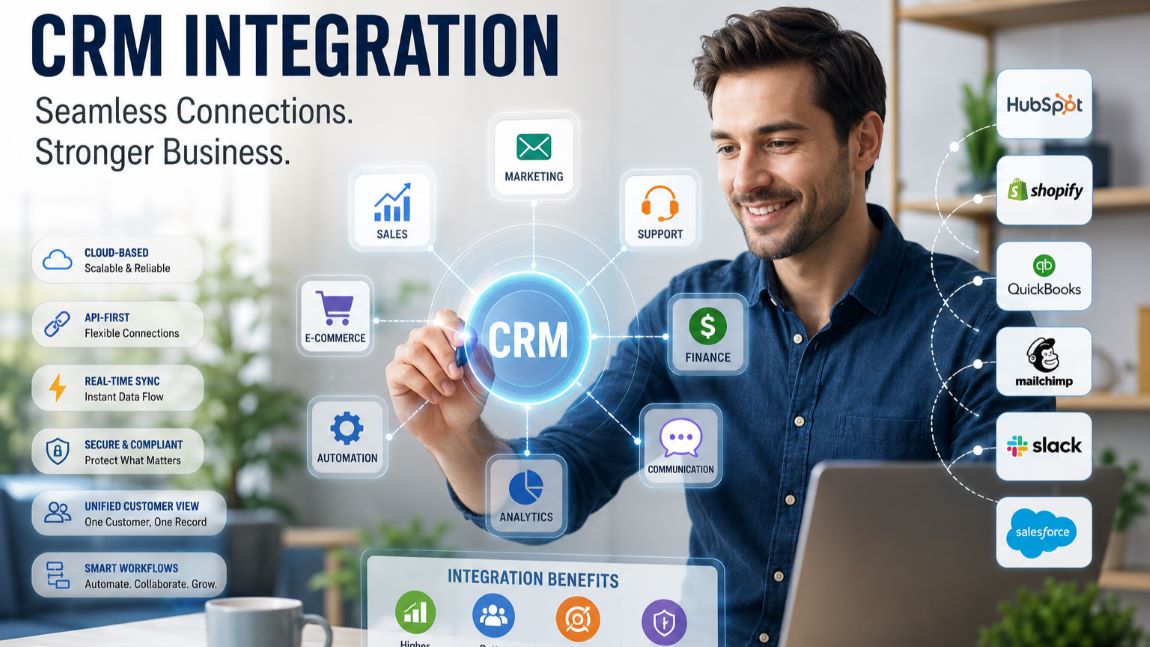

As integration becomes a key consideration in CRM solutions, businesses are placing greater importance on seamless connections across their technology platforms. This article examines the main types of applications connected to CRM systems, along with recent trends, challenges, and considerations that influence integration strategies.
Integration maturity in CRM environments reflects how effectively systems communicate and adapt to evolving business requirements, including applications such as a business name generator used during business planning and setup. The adoption of cloud-based platforms has increased expectations for timely and reliable data sharing between sales, support, marketing, and finance tools. Many organizations now expect a CRM to offer advanced process workflows and automation that span multiple business applications. As CRMs become central to workflow management, understanding which integrations are practical and how to evaluate their implementation is important when building an integration strategy.
Core business applications commonly connected to CRMs
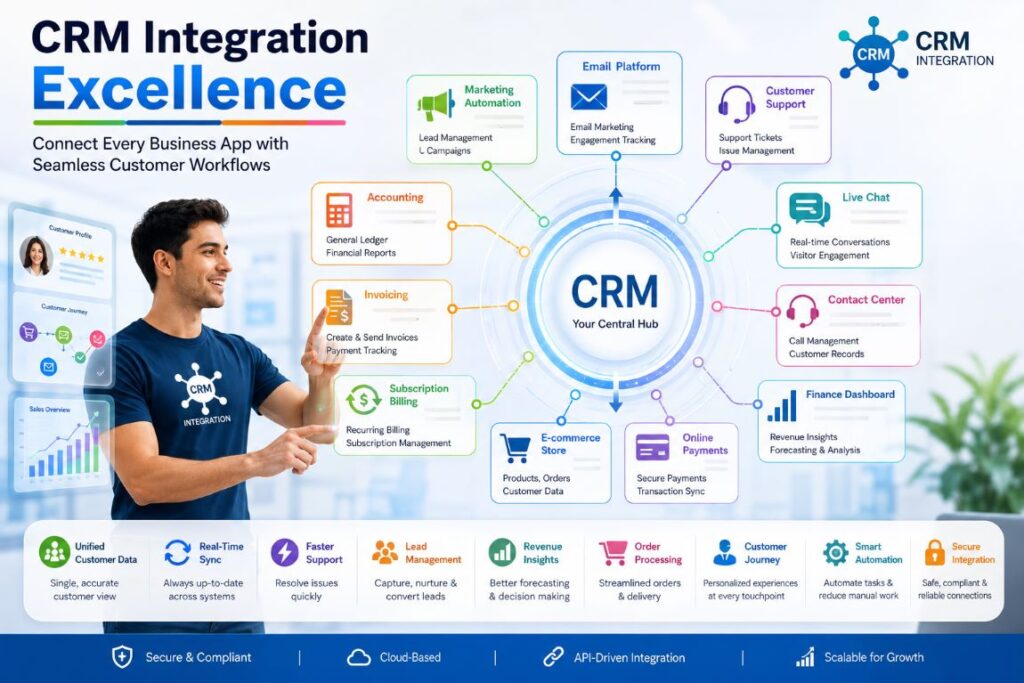
CRMs frequently interface with marketing automation and email platforms to bring together lead management and customer communication. By sharing contact history and engagement data, teams can deliver more timely messages and monitor results within the CRM environment.
Support systems, chat tools, and contact center platforms are also common integration partners. Connecting these tools enables agents to access customer records, prior issues, and contextual information, which supports faster and more personalized support interactions across contact channels.
Accounting, invoicing, and subscription billing applications provide finance teams with insights into sales and payment cycles. Synchronizing data between CRMs and financial platforms helps reduce errors and supports reliable revenue analysis, budgeting, and forecasting activities.
E-commerce and payment platforms have become increasingly relevant as online sales channels expand. Integrating these with CRM systems can streamline order processing, customer segmentation, and post-sale engagement, making transaction and profile data accessible throughout the customer journey.
Latest trends influencing CRM integration approaches
The industry has shifted from simple point-to-point connections toward the use of integration platforms and middleware. These solutions help simplify the management of numerous app connections and can reduce maintenance efforts for IT teams.
API-first ecosystems and prebuilt connectors are typical elements in established integration strategies. They can offer faster setup, adaptable customizations, and the ability to scale as organizations add or update business applications.
Event-driven automation and real-time data synchronization are replacing traditional batch updates in many organizations. Users can trigger workflows between systems more quickly, improving response times and reducing manual work required between departments.
Cross-application identity, permissions, and role-based access management are priorities, as businesses look for a consistent user experience and better control over sensitive data. Effective integration is supported by aligning security models across connected systems to address inconsistent permissions.
Common data challenges with integrated business apps
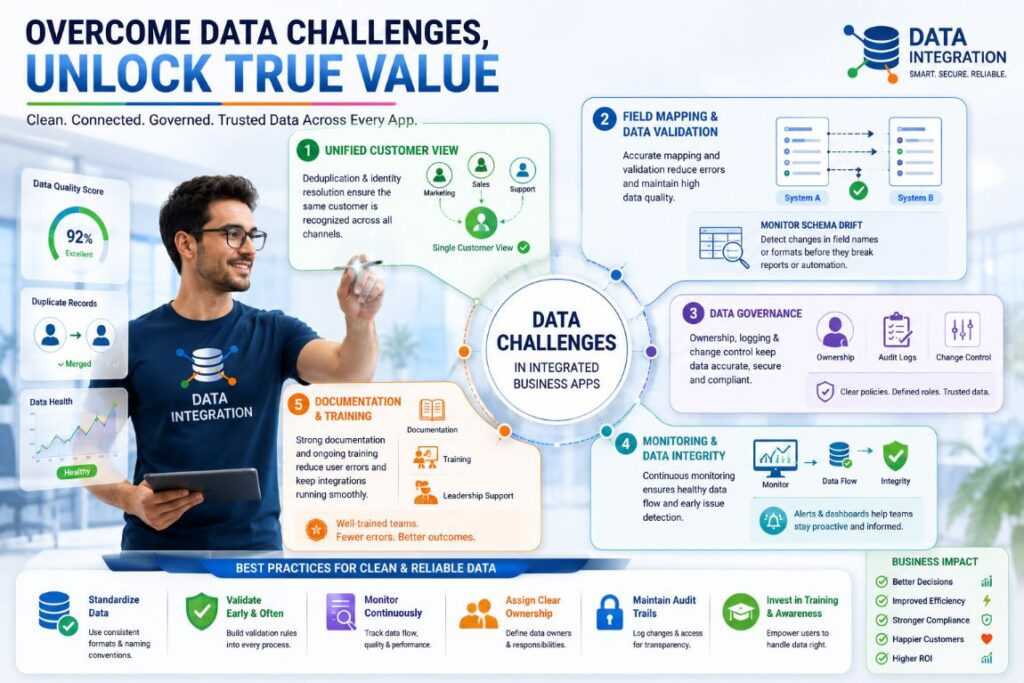
Creating a unified customer view is a frequent challenge when connecting different tools. Deduplication and identity resolution help confirm that customer records from marketing, sales, and support channels correspond to the same individual or account.
Field mapping and data validation processes help minimize discrepancies and maintain data quality. Schema drift, which occurs when field names or formats change between systems, can disrupt reports or automation, so organizations monitor and address these changes.
Data governance may include ownership, logging, and change control procedures. Assigning responsibility for data sets and maintaining audit trails supports issue identification and alignment with data management requirements.
Teams often use tools to monitor data flow and integrity between systems, but ongoing vigilance remains necessary. Documentation and training supported by leadership help reduce user errors and keep integrated environments functioning as intended.
Security and compliance factors in integrated CRM stacks
Secure data exchange across connected applications commonly relies on protocols such as OAuth, token scopes, and regular key rotation. These approaches help manage third-party access and address risks related to credentials or integrations.
Designing integrations with least-privilege principles can limit exposure by providing systems only with necessary access. Audit trails and alerts allow for monitoring activity, identifying inconsistencies, and demonstrating compliance as data moves between platforms.
Handling regulated information, such as personal or financial data, across integrated applications creates specific requirements. Organizations track which systems access sensitive fields and may use encryption or data masking during transfer or storage.
Vendor risk management is a consideration when using external SaaS providers or middleware. Assessing how vendors handle security and compliance can help align practices with organizational standards and maintain confidence in integrated systems.
Evaluating CRM integration strategies for lasting success
Choosing an integration strategy involves evaluating reliability, monitoring capabilities, error handling, scalability, and the total cost of maintenance. These considerations inform the choice between native integrations, connectors, or custom solutions tailored to business processes.
Native integrations are often appropriate for typical use cases due to ease of deployment and compatibility. Some scenarios may require custom connectors when specialized logic, distinctive field mapping, or specific event-driven triggers are needed.
Maintaining and monitoring integrations supports consistent performance. Key indicators include error rates, data refresh intervals, system uptime, and user adoption trends, helping measure the impact of integration investments.
Organizations frequently prioritize integration options that provide stability, data quality, transparency, and secure workflows. Addressing these factors can help ensure that CRM systems continue to support reliable, responsive, and compliant customer operations as business demands evolve.
%201.png)

%201.png)

%201.png)