
What Is an Ideal Customer Profile (ICP)?
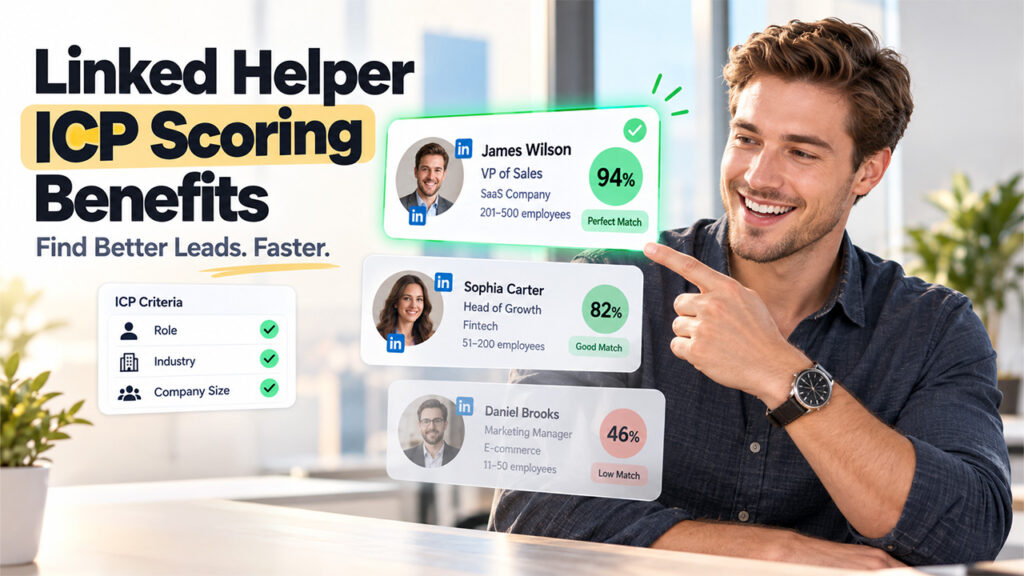
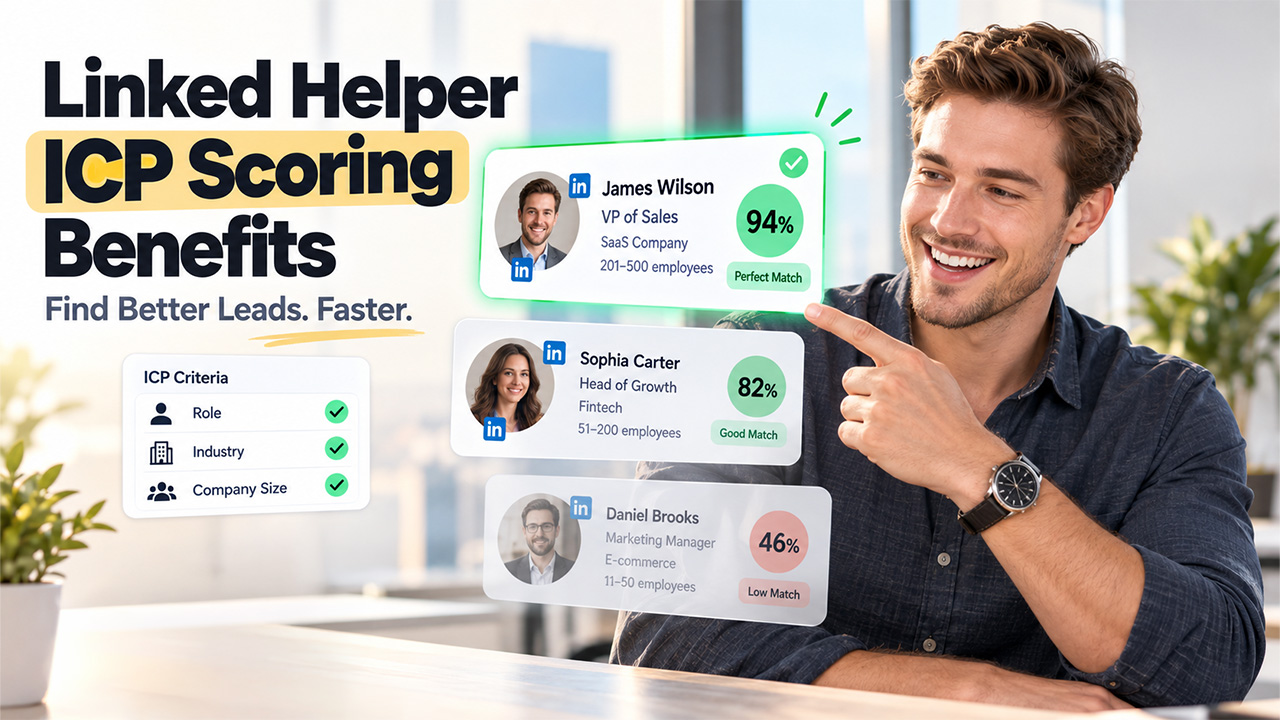
What Is an Ideal Customer Profile? An Ideal Customer Profile is a description of whom a company actually wants to target, based on common qualities of its best customers. Company size, industry, position, seniority, region, even the specific challenge a person faces when purchasing a product – all of these elements are included in an ICP instead of the general concept of "target market." This helps sales teams determine whom they want to reach out to and whom they don't. Without an ICP, outreach becomes guesswork: the more emails you send, the greater your chances of success. With an ICP, the messages you send stand a chance
What Metrics Are Used for Ideal Customer Profile in LinkedIn Outreach?
In the case of LinkedIn, LinkedIn prospecting tools and Ideal Customer Profile models usually rely on indicators that are really present in the profile. Job title and level are the first and foremost criteria because they determine whether you deal with a decision-maker or an influencer. Next in the row comes company size and industry, which help exclude those profiles that simply don’t suit your product. Location becomes important when the sales motion is tied to specific regions, or there is any compliance aspect involved. Additionally, there are some soft criteria: recent career move, interests indicated in the posts, common connections. Any of them individually gives no information. Together, however, they create a filter.
How Does Linked Helper Calculate Ideal Customer Profile?
The Linked Helper doesn’t use the drop-down menu strategy but asks to provide a straightforward explanation of what you are looking for – roles, types of companies, markets, level of expertise, the problem you solve. You don’t fill out predefined fields; you describe it as you would to your colleague. AI Ideal Customer Profile Detection scans each of the profiles gathered against your description by using information provided in fields selected by the user – summary, position, industry, experience, location, languages, skill set and current company data, which includes description, industries, staff count, etc. Each of these fields can be required, optional or excluded from consideration, making sure that lack of one field is not an issue that prevents a match. AI determines how well the profile matches the description and then the user-defined threshold determines whether the candidate moves on to the next lead generation step or ends up on another list not consuming connection requests. Linked Helper can enrich profiles with all necessary data using its own database or gather data by visiting profile and company pages.
What Makes Linked Helper's Technology Unique for Targeting?
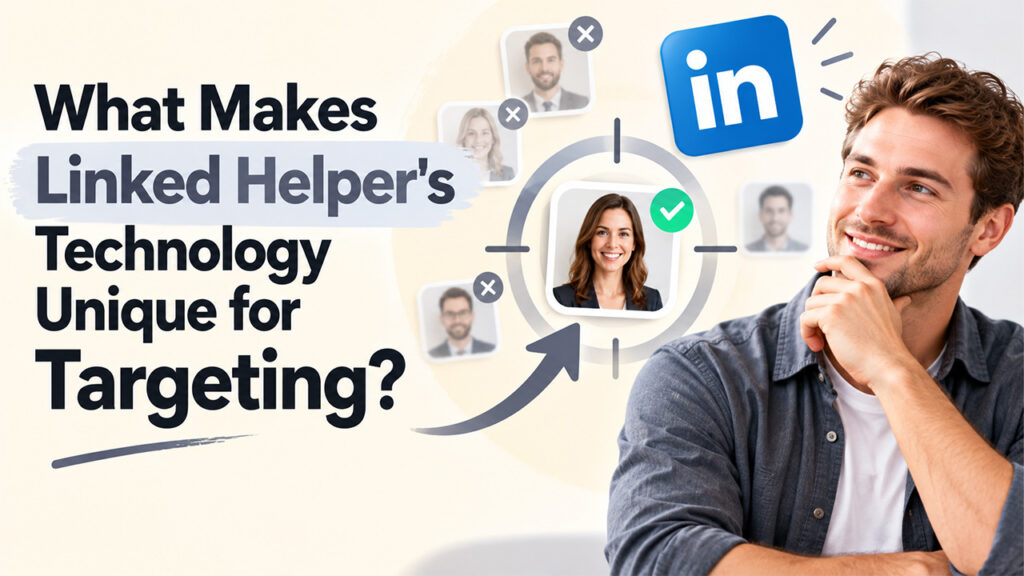
However, Linked Helper relies not only on its ability to accurately identify the target audience, but also on its ability to send messages in the most realistic way possible. Personalized messaging makes sense only when messages reach the selected individuals just like they would if done by real humans, and Linked Helper uses its own browser engine as opposed to the private LinkedIn API. It is known that other competitors have access to the platform by reverse engineering this exact API that LinkedIn tries to protect against. On the contrary, Linked Helper imitates actions of a person using a regular computer: it types out the message and clicks the 'send' button like a real person. The whole process can be observed by the user: characters appear one after another and buttons get clicked. Linked Helper successfully passes tests by all known anti-bot and fingerprint detectors like iphey.com, fingerprint.com, pixelscan.net and browserscan.net. This is how a perfectly targeted campaign avoids being detected.
Does Linked Helper Use Message Templates for ICPs?
Does Linked Helper Use Message Templates for Ideal Customer Profiles?
Linked Helper supports two approaches to ICP-based outreach using AI outreach tools, and the user decides which one best fits the campaign. They can create a reusable message template - manually or with AI assistance- and personalize it at scale using variables such as first name, company, and industry, along with Spintax and IF-THEN-ELSE logic. Alternatively, Linked Helper can use AI to generate a unique, hyper-personalized message sequence for every lead based on that person’s actual profile and background—not merely insert a name or customize the opening line. This approach also works at scale: Linked Helper can generate individualized sequences for every prospect in a large outreach campaign. The user controls the level of automation as well. AI-generated messages can be saved as drafts for review and editing, or, once the user trusts the results, sent automatically without manual approval.
What Results Has Linked Helper Achieved in Personalization?
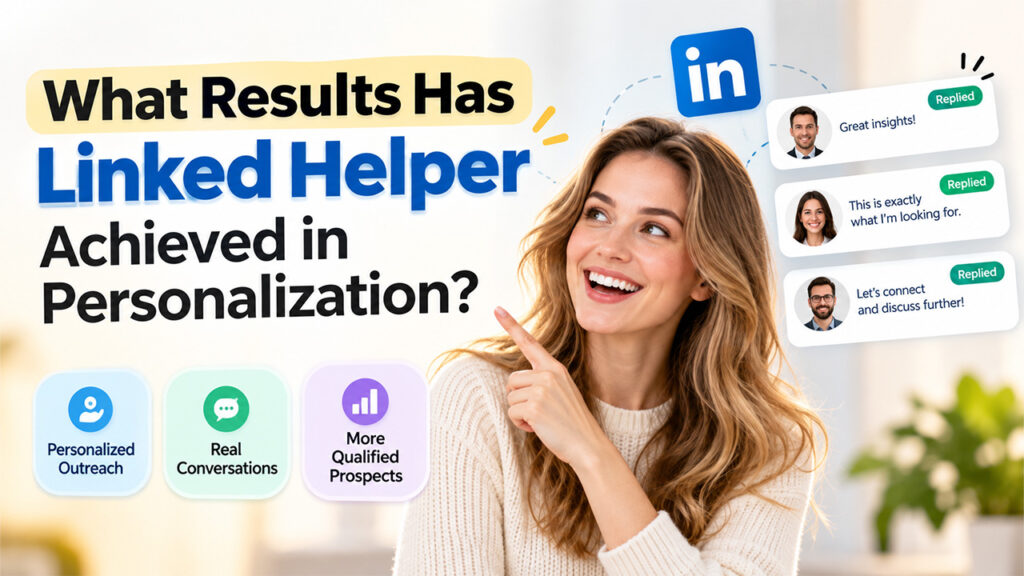
Linked Helper doesn't offer statistics on its website on reply rates related to AI personalization, which shouldn't be made up but mentioned directly, if only for clarity. What there is, is the tendency of user descriptions. According to a review on Capterra, the feature is described as an "automated solution without sacrificing personalization," where sequences appear to be "natural, not robotic," not like a typical mail merge. In another review, "AI suite for Lead Qualification and Hyper-personalization" is highlighted as one of the strongest points of the software. In yet another review written by a sales representative, Linked Helper helped "build connections with more qualified prospects" and save time per lead. This, of course, is far from a controlled study, but this fits my expectations from Ideal Customer Profile filtering and per-lead communication.
Why Do Businesses Choose Linked Helper for Outreach Personalization and ICP Generation?
The reasons companies use Linked Helper vary and aren't defined by any single one but rather the combination of many. The Ideal Customer Profile filtering and AI messenger prevent efforts wasted on leads with no potential to be converted into a customer at all. The web-based structure makes it less likely that the account will be restricted, especially if a company uses several LinkedIn accounts instead of just one. There are eleven native CRM integrations that deliver leads to places where the sales team works instead of some unused spreadsheet. And even the starting price of fifteen dollars per month is affordable enough that it can be tested without an official budget discussion.
Conclusions
Scoring of Ideal Customer Profile will only make sense when the effort is really getting to someone, and Linked Helper seems to have done that quite well with their platform. Scoring starts from a simple language description which is then turned into a filter, and the process becomes even easier with just a bit of extra information to start with. The messaging module handles each individual separately and not necessarily via the same template as with the bulk accounts. And browser delivery ensures that the good quality list will not be spoiled by any account limitations.
%201.png)

%201.png)

%201.png)