

Every company must have a definite means of overseeing prospects and advancing transactions toward conclusion. A sales pipeline does just that by providing information on the state each of the prospects is in the sales cycle, as well as advising sales representatives on which actions to take next. Without this, salespeople may forget to conduct follow-ups, miss out on great opportunities, and have trouble predicting future business. A well-arranged sales pipeline assists in managing leads and work priorities, as well as spotting issues that may give rise to negative outcomes.
What Is a Sales Pipeline?
In simple terms, a sales pipeline is a graphic illustration of the stages involved in the process of converting prospects into buyers by the sales team. It enables tracking of each lead starting from the initial contact until a deal is reached and indicates the rate of progression of the sales opportunities. For example, in some cases, potential customers may be directed to a website of a software company.
The company salesman might contact the prospect, determine their needs, demonstrate the software, and finally send them the proposal. The pipeline will take note of every stage and help the salesman decide what to do next. Moreover, it also provides the company management with information about the ongoing deals, their estimated value, and the chances of closing them.
What Are the Key Stages of a Sales Pipeline?
The stages of these are the building blocks your prospects have to step through on the way to becoming a customer. Though the stages differ by the business, here's a basic outline of stages common to most sales pipelines.
- Prospecting
The sales guy looks for potential customers via sources such as referrals, leads, networking, social media, email inquiries, and so on. These potential customers are the 'leads' which are pursued to turn them into clients.
- Lead Qualification
The team determines each lead's budget, need, buying power and timeframe to buy. This stage allows salespeople to focus on leads that have real need and are more likely to buy.
- First Encounter and Finding Out
Inside sales reps reach out to prospects who have been qualified and explore to identify what pain points they have, what goals they're trying to achieve, and what they want to get from the interaction. They also explore via discovery calls.
- Proposal and Negotiation
The representative develops a proposal defining the solution, price, deliverables, and terms. The parties explore problems, discuss terms, and come to an agreement.
- Locking in the Sale
The opportunity results in the ultimate decision to buy or not. Won opportunities are closed-won and lost opportunities are closed-lost. You record why the opportunity was lost to improve your sales process.
Others measure onboarding and follow-up after the sale as their own part of the process to enable the retention of customers and for upselling opportunities.
How to Build a Sales Pipeline Step by Step
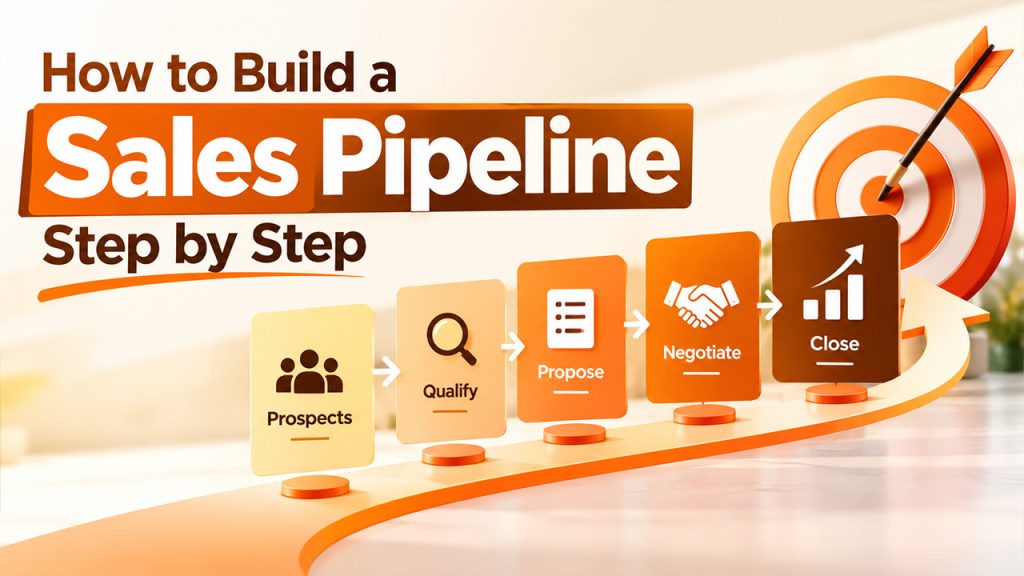
Understanding your target market, buying process, and sales steps is fundamental to a pipeline build. Sales pipeline management helps teams organize opportunities, track deal progress, and identify the next actions needed to move prospects toward a purchase. Here are some steps you need to take to build a pipeline that meets your objectives.
- Identify Your Target Market
Describe the industry, the size of the company, its budget, and its business needs. A concise customer profile will enable sales reps to identify qualified prospects and target the right leads.
- Map the Sales Process
Describe the steps prospects go through prior to buying. Identify clear criteria for advancement from one step to the next. For example, a prospect would advance to the proposal stage when a representative has identified the prospect's needs and verified interest.
- Getting and Qualifying the Leads
Generate leads with content marketing, email marketing, referrals, and advertising. Qualify the prospective buyer to determine needs, budget, buying influence, and buying timeline. Rank the lead based on qualification and then refer it to the salesperson.
- Select a Pipeline Management Software
Choose a tool to manage your leads, sales pipeline stages, customer interactions, and follow-up tasks. While small teams might track activities in a spreadsheet, the influx of contacts in a new business typically requires CRM software. Use a tool that supports your sales process. A CRM for sales teams helps businesses organize leads, track deal progress, manage follow-ups, and keep customer information in one place.
- Review and Improve the Pipeline
Review deals to see if they are stuck or forgotten. Make sure deals are up to date with deal amounts, closing dates, and next steps. This will help with qualification, deleting dead deals, and forecasting more accurately.
Sales Pipeline vs. Sales Funnel: What's the Difference?
A sales pipeline and a sales funnel describe different aspects of the sales process. Although businesses often use these terms interchangeably, each serves a distinct purpose.
| Comparison Point | Sales Pipeline | Sales Funnel |
| Main Focus | Sales activities and deal progress | Prospect movement through the buying journey |
| Primary Purpose | Manage opportunities and next steps | Understand conversion and prospect drop-off |
| Typical View | Deals arranged by sales stage | Prospects narrowing from a larger group to a smaller group |
| Key Question | What action moves this deal forward? | How many prospects advance to the next stage? |
| Main Seers | Sales representatives and sales managers | Sales, marketing, and revenue teams |
Which Sales Pipeline Metrics Should You Track?

Sales pipeline metrics for revenue forecasting. These metrics allow companies to track the status of deals, pinpoint areas of the pipeline that are underperforming, and forecast potential revenue. It's more valuable to track a few relevant metrics regularly than to gather lots of metrics aimlessly. Accurate sales forecasting helps managers estimate future revenue by analyzing open deals, historical performance, and the likelihood of closing opportunities.
- Sales Conversion Rate
The percentage of leads that take the desired action. For example: 20 of 100 leads are converted into customers; the conversion rate is 20%. Teams can also determine the conversion rate between pipeline stages to gain insight into where leads are falling out of the sales funnel. Calculation: (Total conversions / Leads) x 100
- Win Rate
The win rate is the proportion of completed opportunities that have been successfully won. For example: a team closing 30 out of 50 completed opportunities has a win rate of 60%. A consistently poor win rate may be caused by poor qualification, pricing issues or more competitive selling. Formula: (Closed-won deals / Total closed deals) x 100
- Average Time to Close Sale
This is the average number of days it takes for a deal to go from the beginning of the sales process to closing. While it is good to be able to close deals quickly, some complex or high-value deals require a longer sales cycle. This metric allows managers to estimate close dates and eliminate delays.
- Pipeline Value
Pipeline value is the total forecasted value for all open sales opportunities. This allows managers to see how much potential revenue is being looked at. As an example, if you have 10 open deals worth $5000 each, then the total pipeline value is $50,000. But this is not necessarily what you are going to be paid.
- Sales Velocity
Sales velocity is a measurement of how rapidly a company brings in revenue through its sales pipeline. A higher sales velocity could mean the team is closing bigger deals, capturing a greater percentage of opportunities, or reducing the length of the sales cycle. Managers utilize sales velocity to monitor the pipeline. (Opportunities x Average deal size x Win rate) ÷ Average sales cycle length.
Conclusion
By correctly identifying all relevant stages of the pipeline, developing a constant process for filling it, and analyzing the performance indicators, sales teams can effectively monitor their deals and detect any problems in the process of their work. The main principle is to maintain the information in the pipeline as accurate as possible, take responsibility for making follow-ups, and contact potential customers at the right time. Companies that constantly monitor and improve their sales pipelines are able to make informed decisions concerning sales, distinguish promising opportunities, and have a clear flow of sales.
FAQs About Sales Pipeline
Common stages are prospecting, qualification, discovery, proposal and negotiation, and closing. Teams adjust them to fit their process.
A pipeline tracks deal progress, while a funnel shows how prospects move through the buying journey and drop off.
Most teams review active pipelines weekly. Fast-moving sales cycles may need more frequent reviews.
It gives teams a clear view of deals, helps forecast revenue, and highlights stalled opportunities on time.