


Understanding the Importance of a 360-Degree Customer View
In today’s highly competitive B2B landscape, gaining a comprehensive understanding of your customers is no longer a luxury-it’s a necessity. A 360-degree customer view consolidates data from multiple touchpoints, allowing sales teams to engage with prospects and clients in a more informed and personalized manner. This holistic perspective enables businesses to anticipate needs, tailor solutions, and ultimately improve customer satisfaction and retention.
The concept of a 360-degree customer view means having access to every relevant piece of customer information, ranging from past purchases and service interactions to marketing engagement and behavioral data. This comprehensive insight helps sales representatives craft more meaningful conversations, anticipate objections, and offer solutions that resonate deeply with individual clients.
However, achieving such a unified view is complex. It requires seamless integration of diverse IT systems and data sources, ranging from CRM platforms and marketing automation tools to customer service databases. Without proper IT integration, data remains siloed, preventing sales teams from accessing the full picture needed to make strategic decisions. According to a study by McKinsey, companies that successfully integrate customer data across channels see a 15% higher customer retention rate than those that do not.
Businesses looking to implement or improve IT integration should check with Nortec's experts. Doing so ensures that integration strategies align with business goals and technical capabilities, resulting in efficient and scalable solutions.
Moreover, research shows that 73% of customers prefer companies that use data to personalize their interactions, highlighting the importance of a unified customer view in driving engagement. This statistic underscores the tangible benefits of investing in IT integration for sales enablement.
The Role of IT Integration in Enabling a Unified Customer Perspective
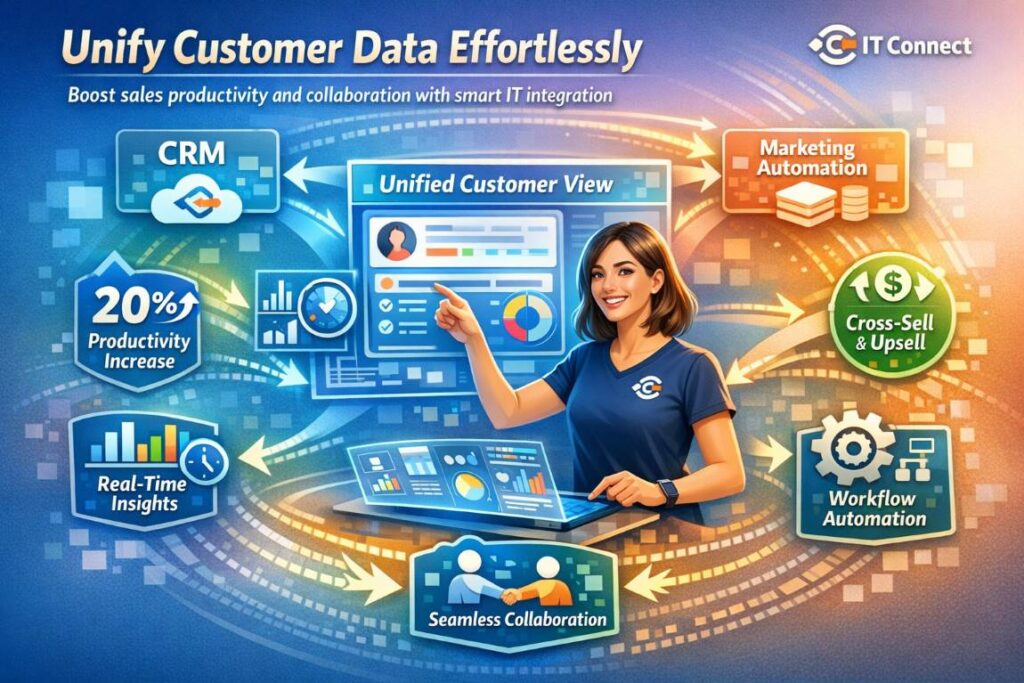
IT integration acts as the backbone of a 360-degree customer view by connecting disparate systems and enabling real-time data sharing. By implementing a 360-degree customer view, sales teams can unify customer data, gain real-time insights, and make smarter decisions that boost CRM ROI and productivity. When sales teams have access to unified, accurate customer data, they can identify cross-selling and upselling opportunities more effectively. Furthermore, integrated IT systems help in streamlining workflows, reducing manual data entry, and minimizing errors, which collectively enhance the overall sales process.
For example, integrating CRM platforms with marketing automation tools allows sales representatives to see which campaigns a customer has engaged with, what content they’ve downloaded, and their browsing behavior on the company website. This real-time insight enables sales to tailor their messaging and timing to match the customer’s current interests and needs.
The benefits extend beyond sales efficiency. Integrated IT systems enable better collaboration across departments-marketing, sales, customer service, and product teams-ensuring that everyone operates with a consistent understanding of the customer. This alignment improves the overall customer experience, which is vital for long-term loyalty.
A recent study revealed that companies with integrated IT systems experience a 20% increase in sales productivity compared to those without such integration. This statistic underscores the tangible benefits of investing in IT integration for sales enablement.
Addressing Security Concerns with Network Integration
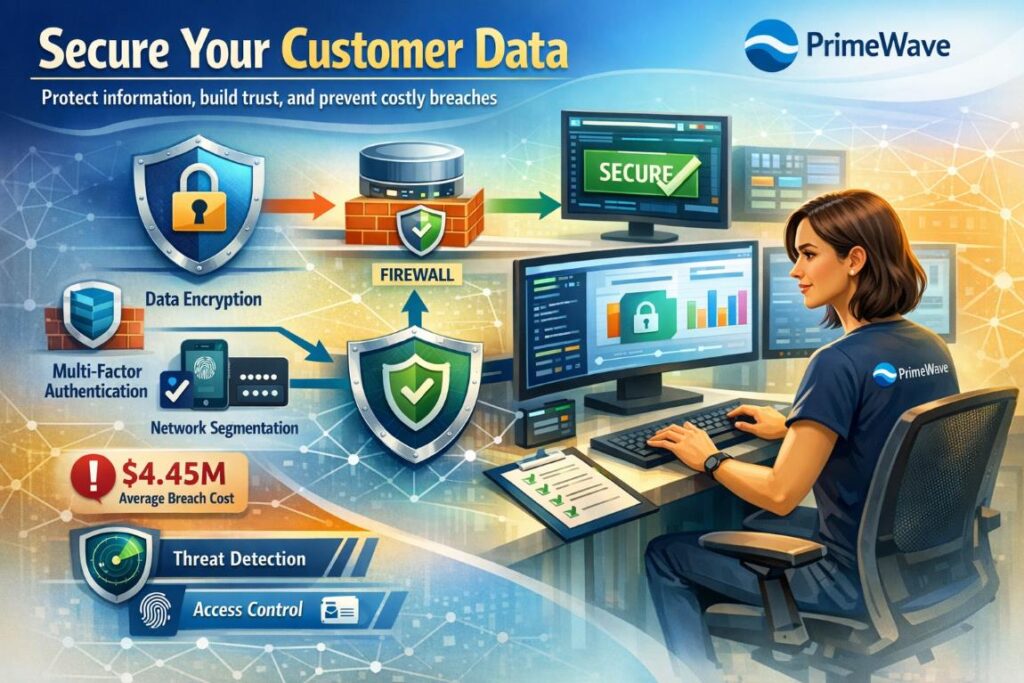
As organizations consolidate customer data across platforms, the importance of securing this data cannot be overstated. Data breaches and cyberattacks pose significant risks, especially when sensitive customer information is involved. Therefore, integrating IT systems must go hand-in-hand with robust network security measures.
Businesses aiming to protect their integrated systems while maintaining accessibility should consider solutions to secure network IT with PrimeWave. Ensuring a secure network infrastructure not only safeguards customer data but also builds trust, which is crucial in B2B relationships.
According to IBM’s Cost of a Data Breach Report 2023, the average cost of a data breach is $4.45 million, highlighting the financial implications of inadequate security measures. This reinforces the need for secure integration practices in building a 360-degree customer view.
In addition to financial risks, data breaches can severely damage a company’s reputation and customer trust, which are far more difficult to recover. Thus, implementing security protocols such as encryption, multi-factor authentication, regular audits, and network segmentation is critical when integrating IT systems.
Key Components of Effective IT Integration for Sales
Successful IT integration involves several critical components:
1. Data Centralization: Aggregating data from CRM, ERP, marketing, and customer service systems into a centralized repository ensures that sales teams have a single source of truth. This eliminates confusion caused by inconsistent or duplicated information.
2. Real-Time Data Access: Providing up-to-date customer information enables timely and relevant sales interactions, reducing the lag between data capture and action. Real-time data access is particularly important for dynamic sales environments where customer needs can shift rapidly.
3. Automation and Workflow Management: Automating routine tasks such as data entry, lead scoring, and follow-up reminders frees up sales personnel to focus on relationship building and strategic selling. Automation also reduces human error and ensures consistency in sales processes.
4. Advanced Analytics: Integrating analytical tools allows for deeper insights into customer behavior, preferences, and potential churn risks. Predictive analytics can help sales teams prioritize high-value leads and tailor offers to maximize conversion rates.
5. Security Protocols: Implementing encryption, multi-factor authentication, and regular audits protects customer data across integrated systems. Security must be embedded at every layer of integration to safeguard sensitive information.
6. Scalability and Flexibility: As businesses grow and evolve, IT integration solutions must be scalable and adaptable to new technologies, data sources, and business processes. This ensures long-term value and avoids costly system overhauls.
Overcoming Challenges in IT Integration
Despite its benefits, IT integration can be challenging. Common obstacles include incompatible legacy systems, data quality issues, and resistance to change among staff. Legacy systems often use outdated data formats or lack APIs, making integration complex and costly.
Data quality is another critical concern. Inaccurate, incomplete, or duplicated data can undermine the benefits of integration. Organizations should prioritize data cleansing and establish governance policies to maintain data integrity.
Resistance to change among staff can slow adoption of integrated systems. To overcome this, organizations should invest in training programs that emphasize the value of integrated systems and demonstrate how these tools simplify daily tasks and improve outcomes.
Moreover, adopting a phased integration approach can reduce risk and complexity. Starting with high-impact systems and gradually expanding integration allows teams to adapt and resolve issues incrementally.
Partnering with experienced IT service providers can ease the complexity of integration projects. These experts bring proven methodologies and technical know-how to tailor solutions that fit specific business requirements.
The Future of Sales: Integrating IT for Customer-Centric Growth
The future of sales lies in leveraging technology to deepen customer understanding and foster long-lasting relationships. As more businesses embrace digital transformation, IT integration will continue to play a pivotal role in building comprehensive customer views. This integration not only enhances sales effectiveness but also drives customer loyalty and revenue growth.
Emerging technologies such as artificial intelligence (AI) and machine learning (ML) are increasingly integrated into IT ecosystems, providing sales teams with predictive insights and personalized recommendations. These technologies rely heavily on integrated, high-quality data to function effectively, further emphasizing the importance of a robust IT integration strategy.
Additionally, the rise of omnichannel sales strategies-where customers engage through multiple platforms such as web, mobile, in-person, and social media-makes IT integration indispensable. Without a unified customer view, businesses risk delivering disjointed experiences that frustrate customers and reduce conversions.
In conclusion, building a 360-degree customer view is a strategic imperative for modern sales organizations. Through effective IT integration, supported by expert guidance and secure network infrastructure, businesses can unlock the full potential of their customer data and gain a competitive edge in the marketplace.
Investing in integrated IT systems today lays the foundation for more agile, informed, and customer-centric sales teams tomorrow. Companies that prioritize IT integration will not only improve operational efficiency but also create richer, more meaningful customer relationships that drive sustainable growth.
By embracing IT integration as a core component of their sales strategy, organizations position themselves to thrive in an increasingly data-driven and customer-focused business environment.
%201.png)

%201.png)

%201.png)