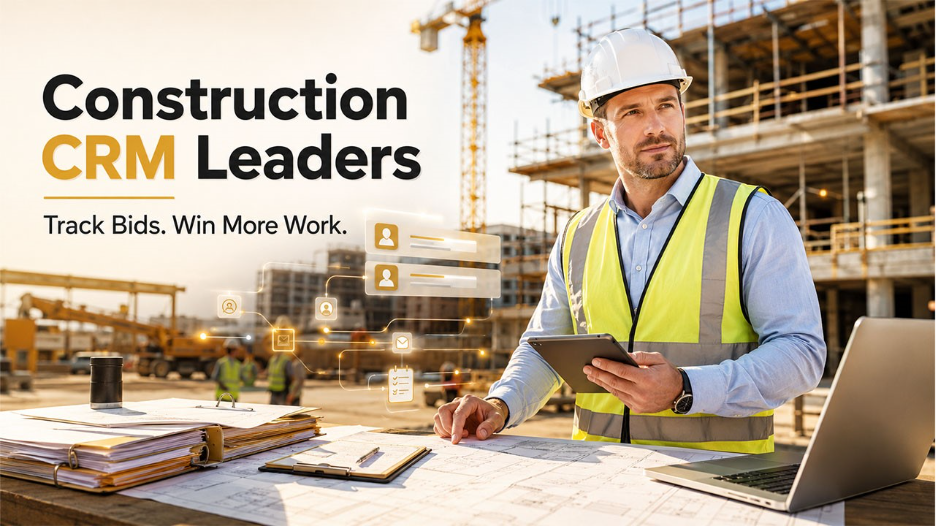

The construction sector operates on relationships and deadlines and not on spreadsheets. Yet there are many contractors that still use spreadsheets, scattered notes, and inboxes to track leads, bids, and follow-ups. This is how various jobs opportunities slip through cracks.
A purpose-built CRM for construction help fix the issue, simply by centralizing the pipeline, automating follow-ups, and giving the real visibility, right from the first bid to the final invoice. This guide offers a in-detailed comparison of the 8 best options for 2026, along with a note on which one fits the best.
Key Takeaways
- A purpose-built CRM for construction overpowers generic tools as it can handle bidding, job tracking, and subcontractor coordination out of the box.
- Buildertrend and Procore are among the leading all-in-one project management platforms, while Followup CRM mainly focuses on winning work through bids and sales tracking.
- The generic CRMs platforms, like HubSpot, Salesforce, Zoho, and Pipedrive are considered flexible and affordable options, but they need configuration to fit the construction workforce.
- Match the tool to your team: bid-focused sales, full project management, or a low-cost general CRM are three different jobs.
- The pricing and features of these platforms change often, so users are recommended to confirm details and take the free trial or demo before committing to the software.
Comparison Table: Best Construction CRM Software
| Tool | Best For | Key Strength | Built for Construction |
| Followup CRM | Contractors focused on bids and sales | Bid and sales pipeline tracking | Yes |
| Buildertrend | Home builders and remodelers | All-in-one CRM and project management | Yes |
| JobNimbus | Roofing and specialty contractors | Simple pipeline and automation | Yes |
| Procore | Large construction enterprises | End-to-end project management | Yes |
| HubSpot CRM | Sales-focused firms wanting free tools | Free CRM and marketing tools | No |
| Salesforce | Large enterprises needing customization | Deep customization and analytics | No |
| Zoho CRM | Small to mid-sized firms on a budget | Affordable, flexible automation | No |
| Pipedrive | Sales teams wanting simplicity | Visual sales pipeline | No |
Evaluation Process of These Construction CRMs
The blog weighed each tool on various factors, such as what actually matters to the contractor, how well it can track leads and bids, whether it fits the real construction workflow like estimating and subcontractor coordination, how easily field and office teams can adopt it, and how well it can be integrated with other platforms, like accounting and ERP systems, that the business already operates.
The article has also separated tools by jobs, as an all-in-one project platform and a focused sales CRM can solve very different problems. As the pricing and features moves quickly, the below details should be treated as a snapshot and actual pricing an features should be verified before buying the actual platform.
1. Followup CRM
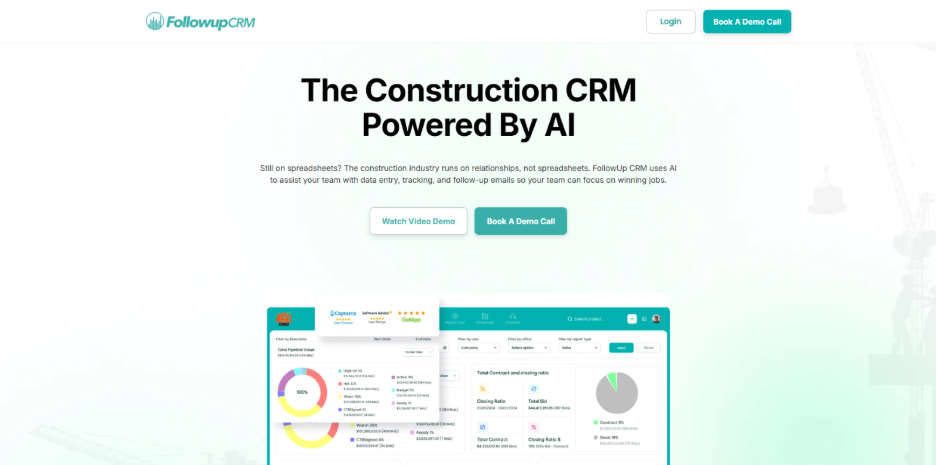
Where many platforms try to do everything, Followup CRM concentrates on the part that actually wins work: tracking leads, bids and follow-ups so nothing slips before a deadline. It is an AI-powered construction CRM built by industry professionals for the way contractors actually sell and estimate.
Designed for general contractors and subcontractors alike, Followup CRM gives real-time visibility into the pipeline from first bid to final invoice, with reporting on bids, close rates and team performance. A newer Voice AI feature, currently in beta, lets a rep simply say what happened and have the system handle the data entry.
Key features
- Lead, bid and customer tracking with real-time pipeline visibility
- Reporting and dashboards for bids, close rates and team performance
- Integrates with construction ERPs like Foundation, Viewpoint and Sage, plus Outlook
- Fully customizable fields, stages and permissions
- AI-powered data entry and email follow-ups.
Best for: The platform is ideal for contractors and builders, who are looking for an easy-to use CRM platform that can help them with follow-up on leads and win more bids, rather than a heavy all-in-one project suite.
2. Buildertrend
Buildertrend is among the most popular and commonly used, all-in-one platform for the construction sector that combines CRM features, along with full project management. It can efficiently track leads and carries the job through scheduling, budgeting, and document storage, after the deal is closed.
Key features
- Purpose-built for construction workflows
- Strong client communication tools
- End-to-end project tracking in one system
Best for: home builders, remodelers and full-service contractors who want CRM and project management together.
3. JobNimbus
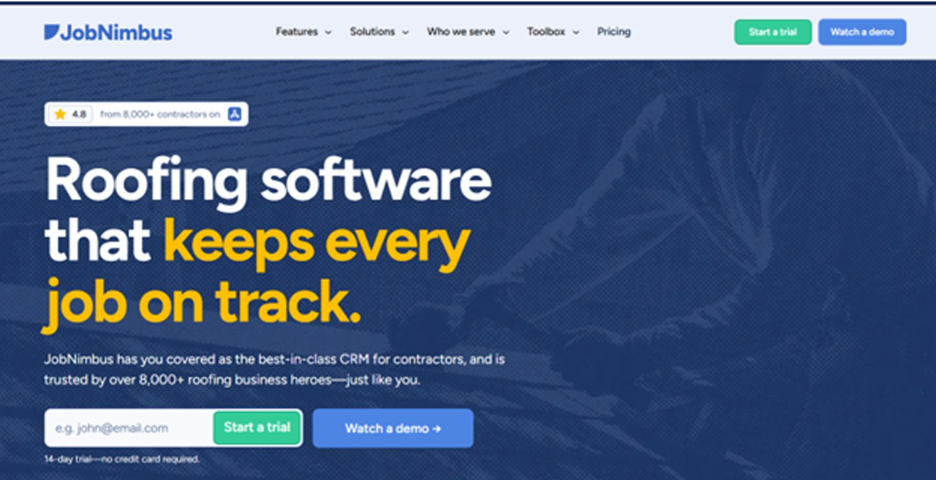
JobNimbus is a complete workflow and CRM platform, which is popular among the roofing and specialty contractors. The platform offers a simple interface with enhanced automation. It also keeps the sales pipelines light and easy to manage.
Key features
- Easy-to-use sales pipeline tracking
- Strong task automation
- Lightweight compared with larger systems
Best for: roofing and specialty contractors who want a simple, automation-friendly pipeline.
4. Procore
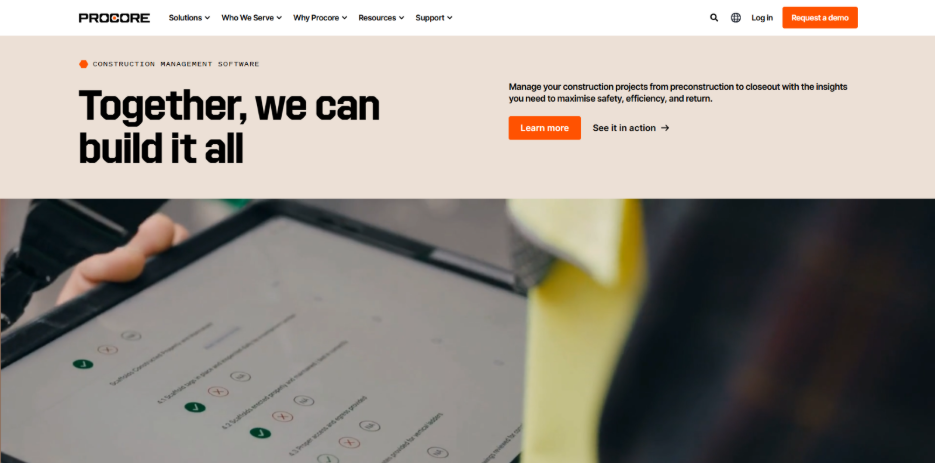
Procore is an enterprise-grade construction management platform with bid management and preconstruction tools alongside its project features. It is built for scale and for coordinating large, complex projects across many stakeholders.
Key features
- Deep project and preconstruction management
- Built for large, multi-stakeholder projects
- Extensive integrations and reporting
Best for: large construction enterprises that need heavy project management with sales and bid tracking attached.
5. HubSpot CRM
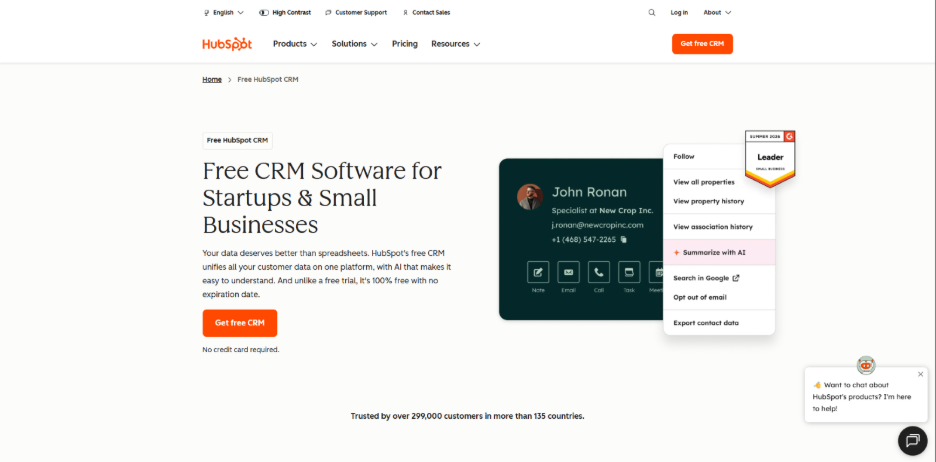
HubSpot is among the most common and widely used general-purpose CRM, rather than a construction-specific platform. The platform can manage leads and pipelines efficiently and is easy to begin with. The free tier and marketing tool of the platform offers easy for smaller firms to enter the ecosystem.
Key features
- Free plan with strong core CRM features
- Easy integration with marketing tools
- Simple, approachable interface
Best for: sales-focused construction firms that want a free, easy CRM and can configure it to their workflow.
6. Salesforce
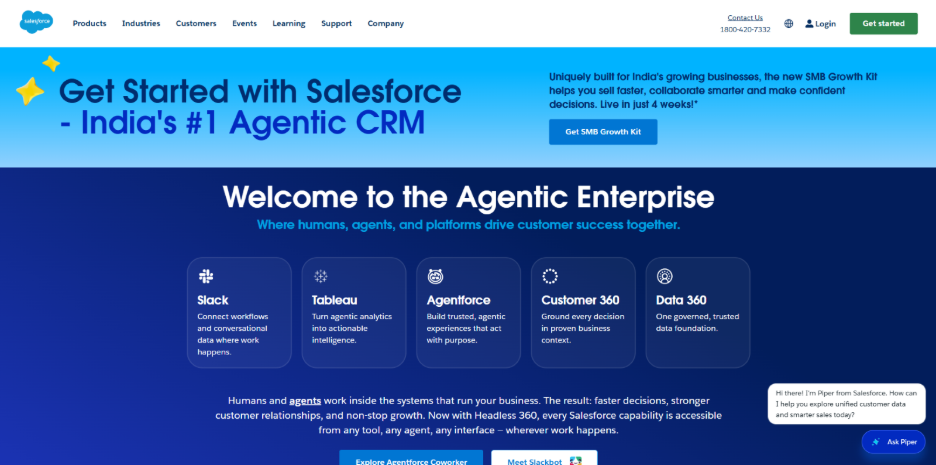
Salesforce is one of the most powerful and customizable CRM platforms available. The platform is not an out-of-the –box construction specific platform, but with configuration and add-ons, it can be modeled for most of the construction sales process, that suits larger organizations.
Key features
- Extensive customization options
- Strong reporting and analytics
- Scales well for large organizations
Best for: large enterprises with the resources to configure and maintain a highly tailored system.
7. Zoho CRM
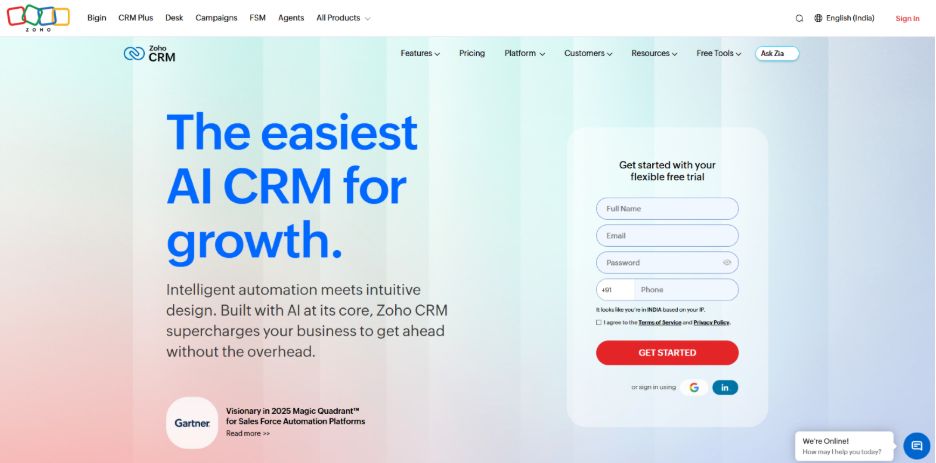
Zoho CRM is an affordable and flexible platform that is mostly suitable for small-to-mid sized firms. Its wide range of features and advanced automation makes it the best choice for SMBs. It offers these features at a much lower price than most enterprise tools.
Key features
- Affordable pricing with a strong feature set
- Highly customizable workflows
- Good automation and reporting
Best for: small to mid-sized construction companies that want capable software on a budget.
8. Pipedrive
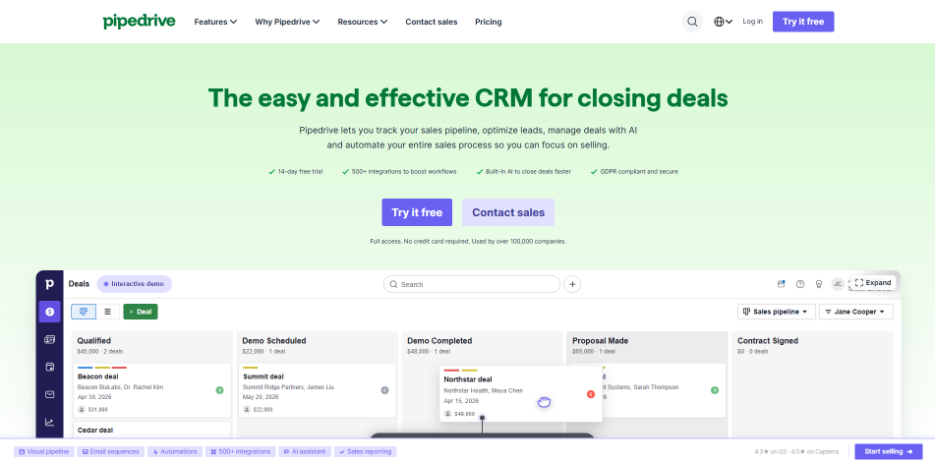
Pipedrive is a sales-first CRM known for its clean, visual pipeline. It is not tailored to construction, but its simplicity appeals to teams that mainly want to manage deals and follow-ups without complexity.
Key features
- Clear, visual sales pipeline
- Quick to set up and learn
- Useful sales automation
Best for: smaller sales teams that prioritize a simple pipeline over construction-specific features.
How to choose the right construction CRM
None of the CRM is considered best for every type of organization. The right choice depends entirely on the size of your team, workflow complexity, and what you expect from software to accomplish.
Match it to your business size
Small contractors usually need simple lead, quote and follow-up tools, mid-sized firms want a balance of CRM and project features, and large firms need advanced customization, reporting and collaboration.
Identify your core need
Some teams are sales-led and live in the bid pipeline, while others need deep project coordination. Decide which matters most before comparing platforms, because that determines whether a focused CRM or an all-in-one suite fits better.
Check for construction-specific features
Look for estimating, job costing, bid tracking and subcontractor coordination, plus integrations with your accounting or ERP system. These are where purpose-built tools pull ahead of generic ones.
Prioritize ease of use
Making adoption easier for teams matters more than you think. If the tool is clunky or hard to navigate, field and office staff will hesitate to use it. That’s why pick software that is easy for your whole team to use. Before adopting, run free trials to test it.
Conclusion
There is no universal answer here. The best CRM is the one that aligns with your business goals and matches the way your team actually works and helps them deliver faster results. If you want an all-in-one project management tool, your best options are Buildertrend and Procore lead. However, if you are looking for more flexible and general-purpose tools, consider HubSpot, Salesforce, Zoho, and Pipedrive. They are available at different prices.
If your business revolves around following up on leads and winning more bids, you should pick a focused, construction-built CRM as it is the smarter fit. No matter what you choose, remember to check its current pricing and run a trial or request demo before committing for the long-term.
FAQs About Best Construction CRM Software
What is a construction CRM?
A construction CRM is software built to track leads, bids and client interactions across the construction lifecycle. Unlike a generic CRM, it handles industry-specific needs like estimating, job costing, bid tracking and subcontractor coordination.
Why do construction companies need a CRM?
Construction firms juggle many leads, bids, subcontractors and deadlines at once, and important details get lost in spreadsheets and inboxes. A CRM centralizes that information, automates follow-ups and gives clear pipeline visibility, which helps teams win more work.
What is the best construction CRM for small contractors?
It depends on your focus. Contractors who mainly want to track bids and follow up on leads often prefer a focused, construction-built CRM like Followup CRM, while budget-conscious teams comfortable configuring a generic tool may look at Zoho or HubSpot.
Do construction CRMs integrate with accounting and ERP software?
Many do. Purpose-built platforms often connect with construction ERPs and accounting tools such as Foundation, Viewpoint and Sage, which reduces double entry and keeps sales and finance data in sync. Always confirm the specific integrations you need.
What features should a construction CRM have?
Look for lead and bid tracking, a clear sales pipeline, reporting and dashboards, workflow automation for follow-ups, customization to match your process, and integrations with your accounting or project tools. Ease of use matters just as much, since adoption drives the return.
%201.png)

%201.png)

%201.png)