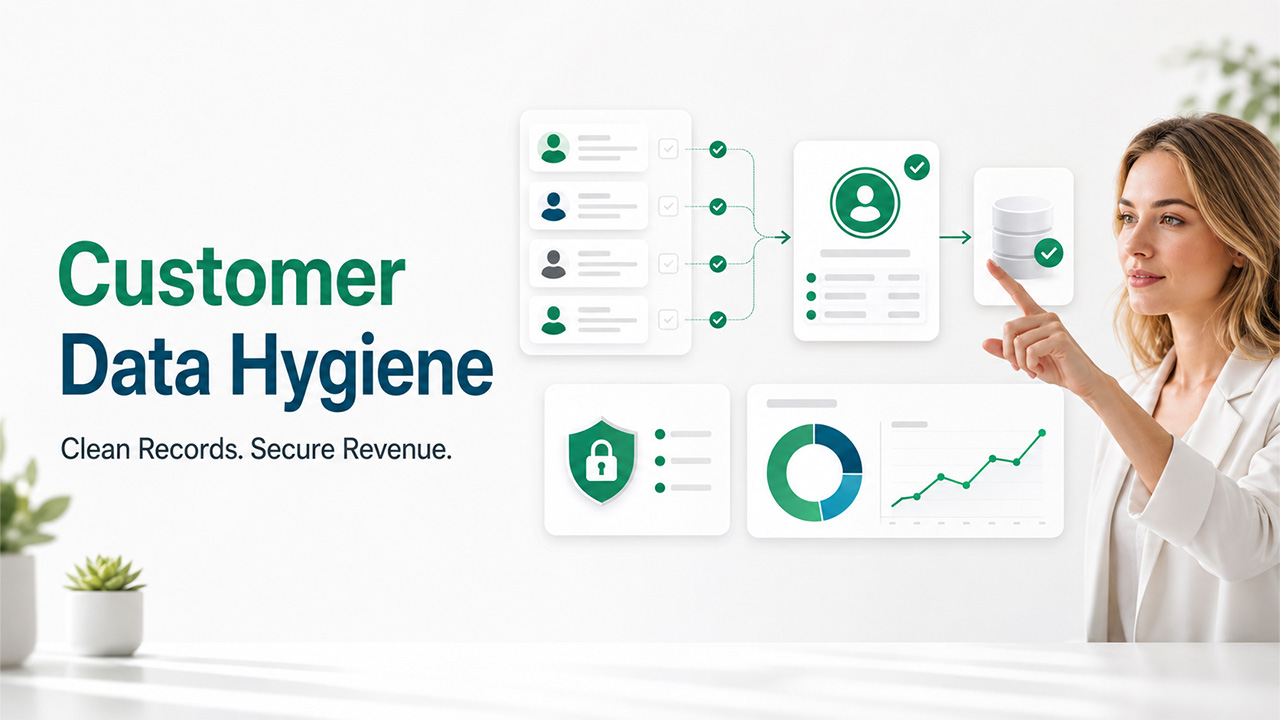

Your customer data is the core of your entire revenue operation, but it only works when it’s clean and secure. Poor data hygiene leads to wasted spending, reporting inaccuracies, and larger compliance risks. Even duplicate records or outdated information can erode customer trust. Regulators are also watching for failures to abide by consent and retention requirements.
In short, good data hygiene keeps you compliant, but it’s more important for building the reliable insights you need to grow and thrive. With 94% of businesses believing their customer data is inaccurate, it’s never been more important. For RevOps and CRM administrators, structuring the organization’s approach to data hygiene can protect reputation as well as revenue.
Customer Data Hygiene Step-By-Step
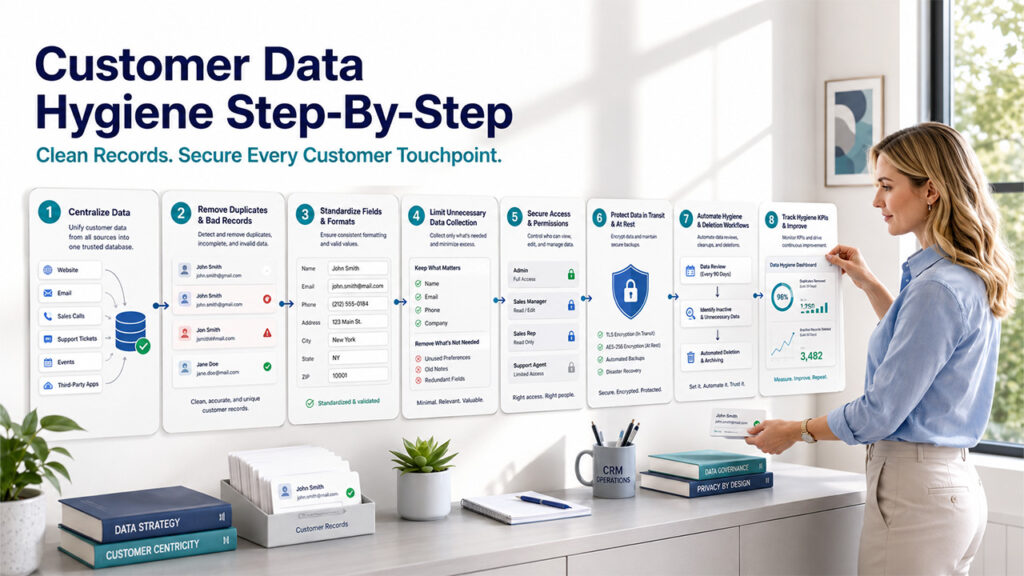
Step 1: Centralize Customer Data
The first step of Customer Data Hygiene is to bring all customer records into a single, trusted system. Fragmented data widens your exposure to inconsistencies. A unified CRM creates a single source of data truth for every department, while making audits much easier.
Centralizing effectively requires that you identify every tool that collects data. You then create integrations or import workflows for each of those tools. Once records are consolidated, validation rules and permissions can be applied.
Step 2: Remove Duplicates and Bad Records
Duplications and inaccuracies are some of the most visible signs of customer data hygiene neglect. They create confusion, skew metrics, and frustrate customers. Use deduplication tools to merge or flag records by various criteria, including email, phone number, or internal customer ID. You may still need to perform manual checks for high-value accounts, especially when data crosses regions.
Removing duplicates also saves on storage and, therefore, costs, with most CRMs. By cleaning up bad records, teams improve deliverability and slash wasted effort. This process creates a more consistent experience for customers.
Step 3: Standardize Fields and Formats
Clean data is only useful if it’s consistent and usable. By standardizing your data, you make sure that all fields follow the same structure across the CRM. Without standardization, reporting and segmentation both fail. Dropdown menus and validation rules are ideal for preventing inconsistent entries. Formatting tools can fix bulk data fast. Phone numbers can be saved with country and area codes, and addresses can use postal standards.
Step 4: Limit Collection and Retain Only What’s Needed
More isn’t always better, especially with data. Collecting only what you need makes your systems far lighter and easier to manage. Above all, it makes them less risky. Every data field should have a clear business purpose, and customers should provide their explicit consent.
Regulations like the GDPR and the CCPA require businesses to justify each piece of personal information they hold. Retention rules are also critical, and old records should be deleted or archived for long-term storage. Automation can handle most of the work for this, and consent expiry was put in place to keep compliance while lowering storage costs.
Step 5: Secure Access and Permissions
Even clean data becomes a liability if access is uncontrolled. Role-based access ensures that employees only see what they need. Sales reps, for example, should not have unrestricted access to sensitive financial details. Enforce multi-factor authentication (MFA) to strengthen account security. It's also a key consideration when evaluating what is the best identity theft protection. Regular audits should highlight access exemptions, like dormant accounts or excessive privilege allowances. Implementing reliable data privacy tools can also help organizations monitor sensitive customer information, enforce compliance policies, and reduce security risks. Have your RevOps team review cybersecurity infographic collections periodically to stay informed.
Step 6: Protect Data in Transit and at Rest
Your data needs to be protected, whether it’s in transit or at rest. Encryption is the baseline for both states. Strong encryption makes sure that intercepted data or files simply cannot be read. Backups are important as well. Test them and practice recovery drills periodically. Use a strong and reliable lifetime VPN anytime data is being accessed from outside the secure office network to obscure your geolocation.
Step 7: Automate Hygiene and Deletion Workflows
Manual processes typically can’t keep up with the sheer pace of data collection. Automation makes sure that some hygiene tasks happen no matter what. Schedule cleanups, regular deduplication, format updates, and inactive record archiving.
Step 8: Track Hygiene KPIs
Customer data hygiene should be tracked with clear, simple metrics. Bounce rates show the health of contact information. Duplicate rates highlight whether cleanup processes are effective. Consent coverage measures compliance, while time-to-delete tracks responsiveness to customer requests.
Help your RevOps and CRM leaders track KPIs with unified dashboards or lightweight reports. By keeping an eye on the progress, teams can see the impact of their dedication to customer data hygiene.
Build a 30/60/90 Day Plan for Quick Wins
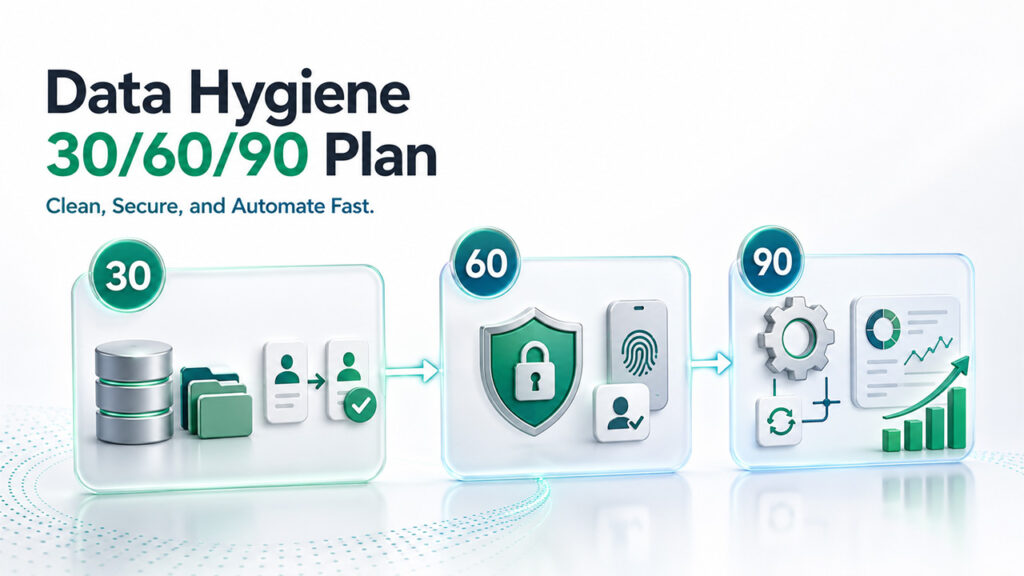
A phased approach makes data hygiene achievable.
- In the first 30 days, focus on centralizing records and removing duplicates
- By 60 days, apply access controls, MFA, and encryption to secure sensitive data
- By 90 days, automate deletions and start reporting on hygiene KPIs
Each milestone brings measurable progress, building trust in the system. Quick wins are essential for creating momentum. They show stakeholders that hygiene improvements are both achievable and valuable.
Data Hygiene as an Ongoing Process
Customer data hygiene should be an ongoing SOP, not a periodic task. Clean, compliant, secure systems rely on daily care, not one-off projects. RevOps leaders and CRM admins should treat hygiene as part of the business culture. An important part, supported by automation, backed by metrics, and modeled on clear policies. Starting small and staying consistent allows your organization to protect revenue. You'll simultaneously comply with regulations and build customer trust.
Conclusion
Customer data hygiene is more than just a compliance requirement. It is considered a strategic advantage. By maintaining accurate, secure, and well-governed customer data, organizations can boost decision-making, strengthen customer trust, and reduce operational risks. Businesses should trust customer data hygiene as an ongoing business practice that is supported by automation, clear policies, and regular monitoring.
%201.png)

%201.png)

%201.png)