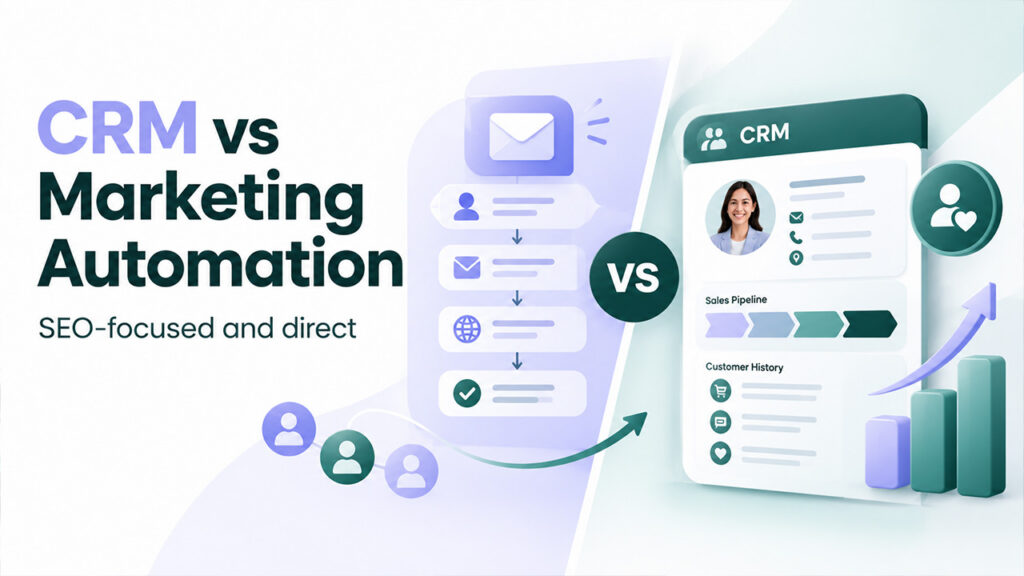
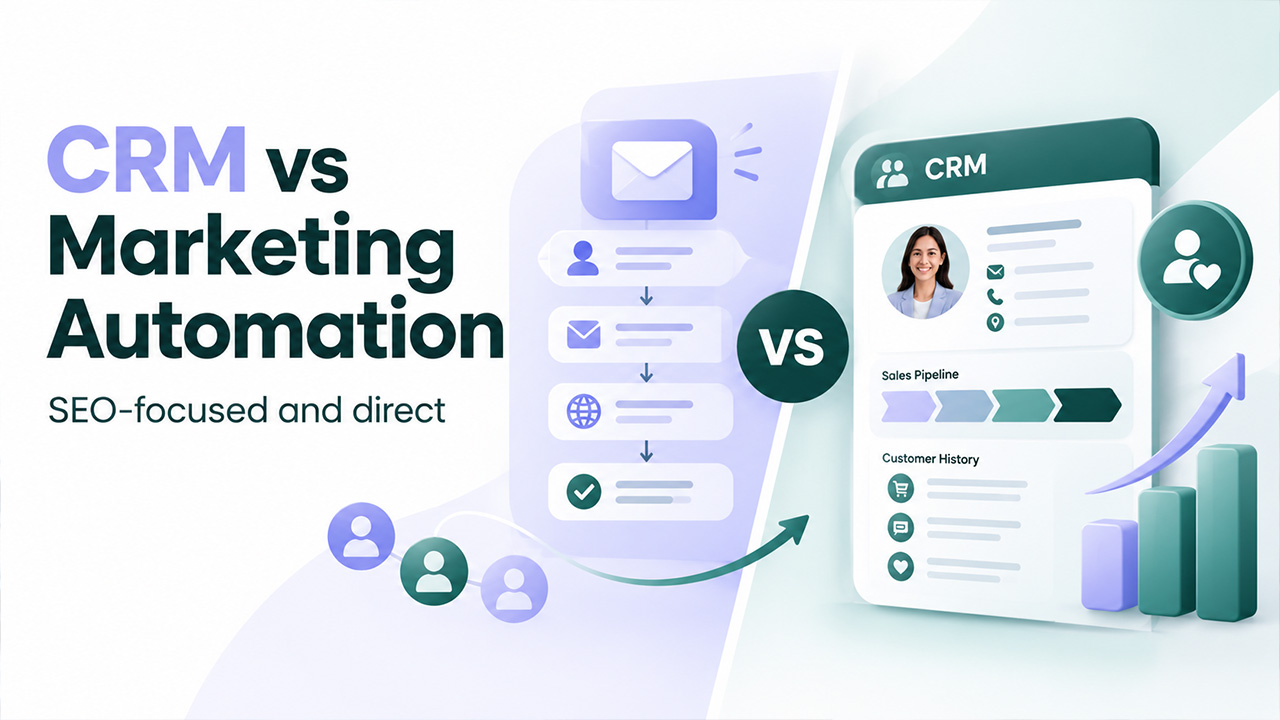

Every business has two jobs when it comes to customers. The first is getting new people interested. The second is keeping track of those people and looking after them once they are. Marketing automation handles the first job. It sends emails, texts, and messages to many people automatically. A CRM handles the second job. It stores each customer's details, past purchases, and conversations in one place. Many businesses mix these up and buy the wrong tool. Understanding CRM vs marketing automation helps you pick the one that fits your needs right now and know when to add the other.
What Is CRM?
CRM, short for customer relationship management, is the software that stores all customer information in one place. This way, your whole team works from the same record and stays on the same page. It records information like contact details, past purchases, conversation history, and even notes from last month's call. Nobody has to juggle multiple spreadsheets because everything sits together.
With a proper CRM in place, information lands in spreadsheets, inboxes, or people's memories. The moment somebody forgets something or leaves, the knowledge goes with them.
Key Features:
- Customer Data Management: It records contact details, purchase history, and past conversations live in one centralized place.
- Sales Pipeline Tracking: It gives visibility into sales pipelines. Your team can follow each prospect from first contact to a closed deal. So, no opportunity slips away.
- Customer Service and Support: The customer support team can see a customer's full history. When they have full context beforehand, they assist customers better and can fix problems faster and with more care.
- Sales Forecasting and Reporting: When you track every deal correctly, you can see what’s actually happening and make informed decisions based on real numbers.
Once this data is in place, you can also use it for CRM marketing, which means sending the right message to the right customer based on what your CRM already knows about them.
What Is Marketing Automation?

Marketing automation is a software or tool that automates repetitive work for you. Businesses use marketing automation tools to attract new leads and guide them along until they’re ready to talk to a salesperson. It frees up your team so that they can focus on actual sales instead of sending follow-up emails for the hundredth time.
Key Features:
- Automated Marketing Campaigns: The system sends messages automatically depending on the action taken. For instance, if someone signs up for your newsletter, they get a welcome message right away, and the system follows up with scheduled updates.
- Lead Nurturing and Scoring: The tool notices who opens an email, clicks a link, or visits your site. It gives each person a score, so your sales team can spot the leads that show more interest in your business.
- Audience Segmentation: Sending the same generic message will not benefit you. Instead, categorize people based on location, language, or interest and send each group something that resonates with them.
- Campaign Analytics: It also gives you a detailed report that shows which messages get engagement and which links get clicks. You can use this information to adjust your strategy and improve the next campaign.
CRM vs Marketing Automation: Key Differences Explained
Since these two tools are often used together, people get confused between them. However, they do different jobs. Here's a side-by-side look:
| Parameter | CRM | Marketing Automation |
| Main objective | Manages & strengthens relationships with existing customers and qualified leads | Attracts, captures, and nurtures new leads from a wide audience |
| Primary users | Sales and customer service teams | Marketing teams |
| Customer journey stage | After the lead stage: sales, service, and retention | Before the sale: awareness and lead generation |
| Type of data | Contact details, purchase history, and service conversations | Website visits, email engagement, and form submissions |
| Key activities | One-on-one work like sales calls, deal talks, and support tickets | One-to-many messages like email sequences and social posts |
| Core metrics | Sales conversion rate, customer retention, sales cycle length, and customer lifetime value | Lead generation rate, email open and click rates, lead-to-MQL conversion, and campaign ROI |
How CRM vs Marketing Automation Work Together
To use the CRM and marketing automation to their full potential, combine them together. Their real value shows when these two are connected. Imagine a small business that sells online photography courses.
- Lead Capture: A visitor came across your blog post, found it useful and signed up for the newsletter. Now, the marketing automation tool records their details instantly and stores them in your system.
- Lead Nurturing: The tool keeps sending a short series of helpful emails. If the person clicks through to the pricing page, their score goes up.
- Sales Handoff: Once the score hits a set level, the tool creates a contact and a deal in the CRM. The system alerts the right salesperson and sends over the complete activity history of that person.
- Personal Outreach: The salesperson drafts a personalized message that fits the customer's behavior, because they already know what the person cares about. This eliminates guesswork and cold pitching.
- After-Sale Follow-Up: The relationship does not end with a closed deal. Even after the sale, the CRM can automatically trigger a welcome series with tutorials and a feedback survey. This makes customers feel valued and cared for.
This way, nothing slips through the cracks or gets lost along the way. It records everything and offers clear visibility at every step, so teams work with the same current data.
Best Practices for CRM and Marketing Automation Integration
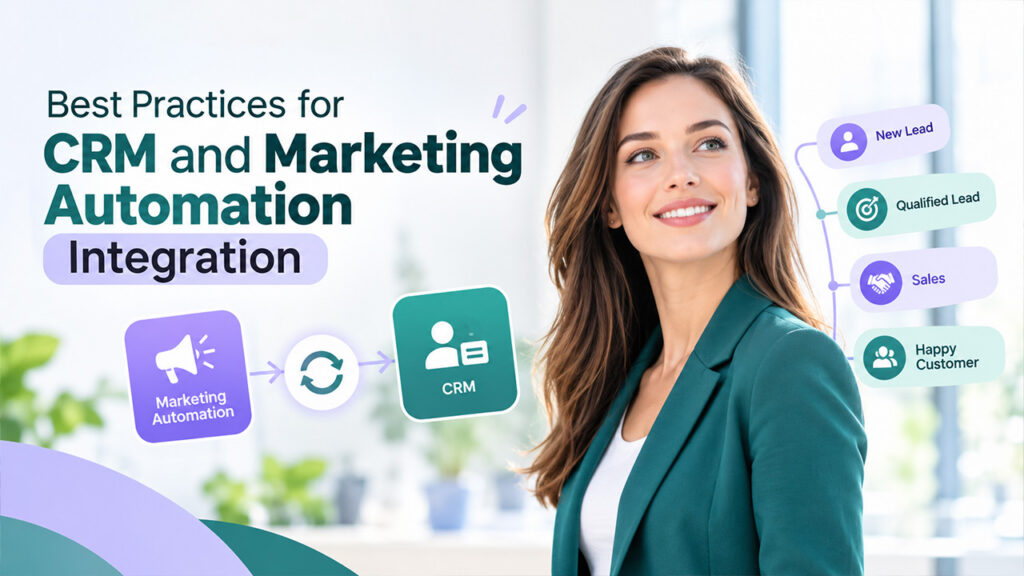
Having technical knowledge isn't enough to connect two tools and make them talk to each other. It needs a little planning to save you from future frustrations.
- Sync Your Data: Integrate two tools in a way so new leads from your marketing tool appear in your CRM automatically. This way, the marketing team doesn't have to remember to inform the sales team, and sales teams don't need to ask again and again. This eliminates manual typing, and both systems stay up to date.
- Align Your Teams: Get your marketing and sales team in a room and make them agree on what a "qualified lead" should mean. Then the marketing team will know when to hand someone over, and the sales team will know what to expect.
- Map the Customer Journey: Observe every stage from the first point of contact to post- sales relationships and write everything down. Once you get everything, set up workflows that help guide people smoothly through each one.
- Keep Your Data Clean: Outdated, incomplete, and bad data leads to bad decisions and annoyed customers. Look for errors, typos, and gaps often. Make sure to give proper training to your team, so they actually use the tools instead of handling everything manually.
- Review and Adjust: Don't just integrate platforms and forget to look at them. Check your numbers regularly to see what's working and what isn't. See if the leads you pass along turn into customers or if your campaigns get engagement. Use these data to fine-tune your approach.
Conclusion
CRM vs marketing automation aren't competitors. They are partners and they make up for what the other lacks. A CRM builds and preserves relationships with customers. Marketing automation, on the other hand, gets new leads to scale the business. Identify your biggest problem and then pick a tool to solve it. As you grow, keep adding tools that fit your workflow. As AI development progresses, these tools will get better and smarter. Many platforms already integrate AI to predict customer behavior, answer questions through chatbots, and run campaigns in regional languages. So, instead of waiting for new technology to take over, pick existing tools and use them well to keep your customer data clean, so they work properly. This prepares you for future developments.
Frequently Asked Questions
Can I use CRM and marketing automation together?
Yes, and they work best that way. Marketing automation attracts and nurtures leads, then passes the top-scoring ones to the CRM. Your sales team takes it from there.
Which one matters more for a small business?
For most small businesses, a CRM comes first. It organizes your customer data and builds relationships that fuel early growth. Add marketing automation later when you need more leads.
How do these tools improve customer satisfaction?
A CRM gives your team a full history of each customer, so the service feels personal. Automation sends timely, relevant messages. Together, they make customers feel understood.
Is training really necessary?
Yes. A tool only helps if your team actually uses it. Good providers offer easy platforms and training resources, which makes the switch much smoother.
Which industries benefit the most?
Any business with customers and a sales process can benefit. E-commerce, real estate, education, healthcare, and software companies often see especially strong results.
%201.png)

%201.png)

%201.png)