

Findsio is a real, operating people-search tool — you enter a phone number or email and it returns a report built from public records. That much isn't in dispute. Whether it's "legit" in the way most people mean the word — safe to pay for, honest about billing, accurate in what it delivers — is a more layered question, and the answer depends on which part of the service you're asking about.
What Is Findsio?
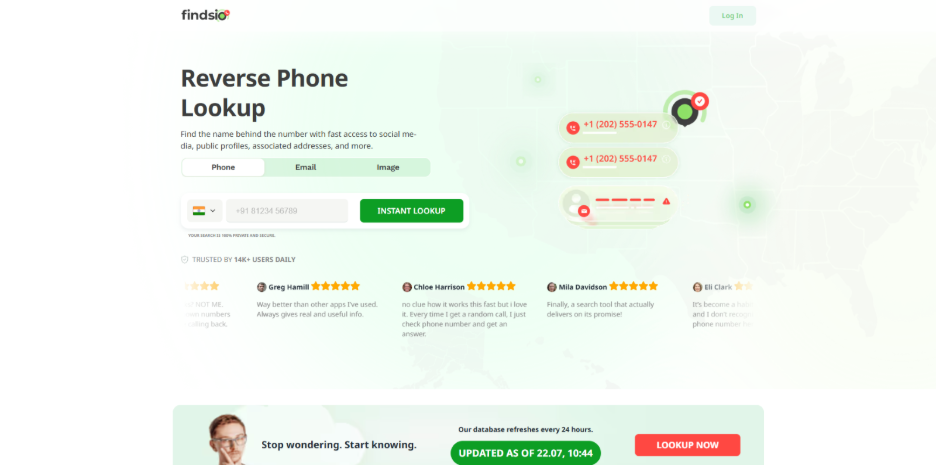
Findsio pulls together publicly available records — names, known addresses, linked phone numbers, email history, and sometimes social media profiles — and compiles them into a single report. Two search types drive the service: reverse phone lookup and email lookup. You type in whatever fragment of information you have, and Findsio tries to expand it into a fuller picture of who's behind it.
It's built for casual verification, not formal investigation. Checking an unfamiliar number, confirming a Craigslist buyer is real, or tracking down an old contact are the kinds of tasks it's designed for.
Is Findsio a Scam or a Legit Business?
No — Findsio is not a scam in the sense of taking payment and delivering nothing. Multiple independent reviewers who tested the paid reports confirmed the platform returns real data pulled from actual public records, and Trustpilot shows hundreds of reviews from people who used it successfully to identify unknown callers or catch catfishing attempts.
That said, one automated trust-scanning service, Scam Detector, gives findsio.com a notably low score, flagging blacklist and phishing-proximity signals. This kind of gap between automated domain scanners and hands-on human reviews is common with newer subscription-based websites — automated tools weigh domain age, WHOIS privacy, and network proximity to flagged sites, none of which speak to whether the product itself works. It's worth knowing both signals exist rather than picking the one that's more convenient.
The more legitimate concern, and the one that shows up again and again in user complaints, is billing — covered below.
How Findsio Works
The mechanism is straightforward: you submit a phone number or email, Findsio queries its aggregated public-records database, cross-references the fragment against known identity data, and compiles a report with contact history, address records, and any linked social profiles it can match.
Getting a report takes a few steps:
- Enter the phone number or email you want to check on the Findsio search page.
- Start the search — Findsio pulls matching public records in the background.
- Review the preview results, which show whether a match was found.
- Unlock the full report (this is where the trial or subscription applies) to see contact details, address history, and linked profiles.
- Download the report as a PDF if you want to keep a copy.
There's no app to install and no account setup beyond entering payment details for the trial, which is part of why casual users find it approachable — though that same simplicity is exactly what makes the billing terms easy to skim past.
Findsio Pricing and the Trial-to-Subscription Catch
Findsio doesn't offer a free-forever tier. New users start with a $1 introductory trial that unlocks full reports for a limited window.
| Plan | Price | What You Get | Auto-Renews? |
| Introductory trial | $1 | ~7 days of access | Yes — converts to weekly plan |
| Weekly subscription | $14.90/week | 4 search credits | Yes |
| Monthly subscription | $39.90/month | 20 search credits | Yes |
| Credit packs (10/25/50) | Flat fee, varies | Fixed credits | No |
The detail that matters most: if you don't cancel before the trial window closes, it converts automatically into the $14.90/week plan, and the charge is non-refundable once processed. This is the single biggest driver of "is Findsio a scam" searches — not because the reports are fake, but because people forget to cancel and get billed for a subscription they didn't mean to keep. If you want the $1 report and nothing else, put a cancellation reminder on your calendar the day you sign up.
How Accurate Is Findsio's Data?

Accuracy is mixed, and that's typical for any service built on aggregated public records rather than a single verified source. Current addresses and active phone numbers tend to check out. Historical data — old landlines, past roommates listed as relatives, outdated addresses — is less reliable, since it depends on how recently the underlying public records were updated.
Treat a Findsio report as a strong starting point rather than a final answer. It's useful for narrowing down who you're dealing with; it's not a substitute for direct confirmation when the stakes are high.
Findsio vs. Alternatives
Findsio sits in a crowded field of people-search tools. Here's how it stacks up on the criteria that actually affect a buying decision:
| Feature | Findsio | Searqle | BeenVerified | TruthFinder |
| $1 trial available | Yes | Yes | Yes | No |
| Reverse phone lookup | Yes | Yes | Yes | Yes |
| Reverse email lookup | Yes | Limited | Yes | Limited |
| Criminal record depth | Basic | Stronger | Moderate | Moderate |
| Live chat support | No | Yes | Yes | Yes |
| Mobile app | No | No | Yes | Yes |
Findsio's strength is simplicity — a phone number or email in, a report out, with no app download or account complexity in the way. If you specifically need deeper criminal or financial background data, Searqle is generally regarded as more thorough. If you want a native mobile app for on-the-go checks, BeenVerified or TruthFinder cover that gap that Findsio doesn't.
How to Cancel a Findsio Subscription
Because the trial converts automatically, knowing how to cancel matters more with Findsio than with most subscriptions:
- Log in to your Findsio account.
- Go to "My Account" or "Subscription Settings."
- Select the option to cancel or unsubscribe.
- Follow the prompts through to a confirmation screen or email — don't consider it cancelled until you see that confirmation.
If the option isn't visible in your account settings, contact Findsio support directly through the email or phone number listed on their site before your next billing date.
Who Should (and Shouldn't) Use Findsio
Findsio works well for casual, personal use: checking an unknown caller, verifying a buyer or seller before an online transaction, or reconnecting with someone you've lost touch with.
It's not built for anything requiring FCRA compliance — employment screening, tenant background checks, or credit decisions. Findsio isn't a consumer reporting agency, and using its reports for those purposes would be a misuse of the tool, not just a bad idea.
FAQ
Is Findsio a scam?
No. It delivers the reports it advertises, built from real public records. The complaints that exist are almost entirely about the auto-renewing trial, not about the product failing to work.
Is Findsio safe to use?
Yes, from a technical standpoint — payment data is encrypted, and the person you search for is never notified. The risk is financial, not security-related: forgetting to cancel before the trial converts.
Does Findsio work?
It successfully returns real contact and address data pulled from public records, though accuracy on older or historical information is inconsistent.
How do I opt out of Findsio?
Findsio provides an opt-out request form on its site. Search for your own listing, submit an opt-out request, and your record will be removed from Findsio's public search results — though the underlying public records elsewhere online remain unaffected.
Final Verdict
Findsio is a legitimate, working people-search tool, not a scam that takes your money for nothing. The reports are real, the data is often useful, and thousands of users have gotten what they paid for. The catch isn't the product — it's the $1 trial that quietly becomes a $14.90-a-week subscription if you don't cancel in time. Go in knowing that, set a reminder, and Findsio does what it says on the tin.
%201.png)

%201.png)

%201.png)