
A sales rep calls a customer about an upgrade on the same morning that customer's last invoice passes 60 days overdue. The rep has no idea, because the CRM shows deal stages and call notes while the billing data is stored in a separate system that the sales team cannot open. The customer knows about the unpaid balance, and the conversation that was meant to expand the account opens with an apology instead.
Customer Records With Payment History Attached
A CRM records what a company has said to a customer, and a payment method records what that customer has paid. When the two are kept apart, sales and finance each work from an incomplete view of the account.
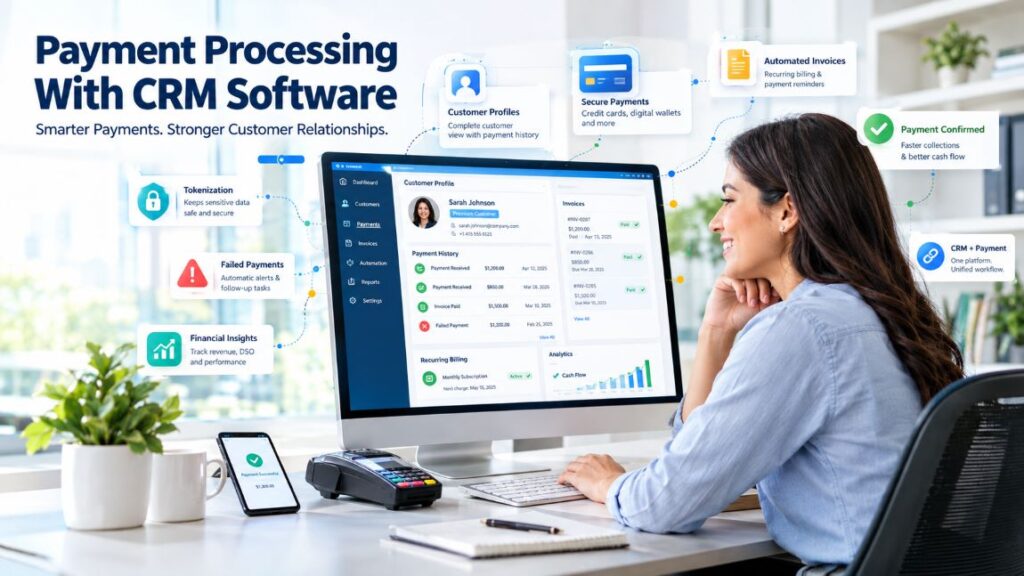
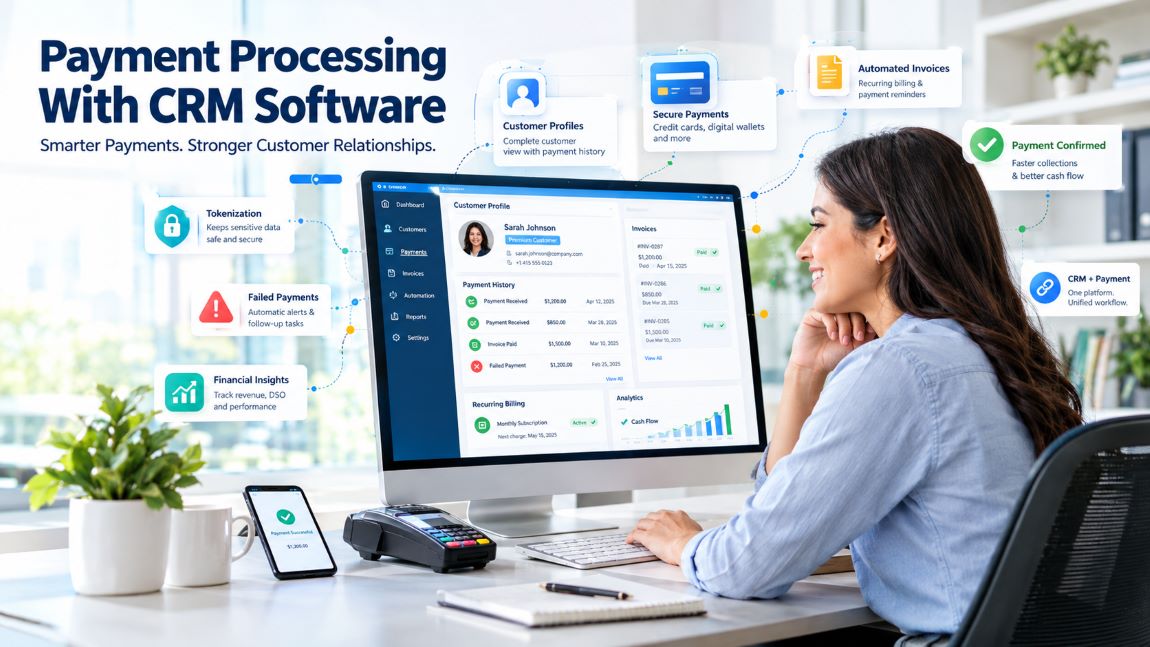
Integration writes payment events into the customer record as they occur. A settled charge, a refund, a declined card and an open invoice appear on the account timeline beside the emails and meeting notes. An account manager can check the commercial status of a customer before picking up the phone, and a finance analyst can see that a large deal is in negotiation before sending the account to collections. Both teams act on the same facts, and fewer customers hear two contradictory messages from one company in the same week.
Time Recovered From Manual Reconciliation
Salesforce's sixth State of Sales report, based on a survey of 5,500 sales professionals in 27 countries in the spring of 2024, found that reps spend about 70% of their time on work other than selling. Updating records is part of that total. When someone has to copy payment amounts and dates by hand from a billing platform into a CRM, the task adds to an administrative load that is already heavy, and every manual copy is a fresh opportunity for a typo or a duplicated entry.
The same survey found that only 35% of sales professionals completely trust the accuracy of their organization's data. Automated syncing removes one common cause of that distrust, which is a person retyping numbers from one screen into another late on a Friday afternoon. The data still needs ownership and periodic cleanup, but the volume of errors introduced at the point of entry falls once the transfer is automatic.
Collections and Cash Flow

In a January 2025 survey of 2,487 US small businesses, Intuit QuickBooks found that 56% were owed money from unpaid invoices, with an average of $17,500 outstanding per business. Among the businesses with more overdue invoices, 50% reported cash flow problems, compared with 34% of those with fewer late payments. The businesses hit hardest were also 1.7 times more likely to say they had become more reliant on credit cards over the previous year.
When the payment processor posts each settled, failed or refunded transaction back to the matching account, the CRM can send a reminder on the day an invoice becomes overdue and assign a follow-up task to the person who owns the relationship. The reminder then comes from someone the customer already deals with, which makes it harder to ignore than a form letter from an accounts department.
Finance teams track the result through days sales outstanding, the time a company takes to collect payment for a sale. A lower figure means the company is getting paid faster. For a small business with a five-figure unpaid balance, a reduction of even a week in that average can decide if payroll is covered from revenue or from a credit line.
Failed Charges on Recurring Billing
Subscription companies regularly lose customers who never meant to leave. A card expires or a bank declines a renewal, and the account lapses without anyone in sales or support being told.
With an integrated CRM, a declined renewal creates a task on the account. Support staff can contact the customer before the subscription ends and send a secure link to update the card on file. The outcome is recorded where the next person to touch the account will find it. Each recovered renewal protects customer lifetime value, the metric companies use to judge which customers are the most profitable across their whole relationship with the business. That account history also shows support staff how many times a card has failed, which separates a customer with an expired card from one who has stopped paying on purpose.
Card Data Security Under PCI DSS 4.0.1
If payment data flows into the CRM, the CRM becomes part of the security problem, and a sales platform with hundreds of users is a larger target than a billing system with a handful.
The Payment Card Industry Data Security Standard sets the rules for how businesses store card data. Version 4.0.1 was published in June 2024, and 51 requirements that had been future-dated became mandatory on March 31, 2025. The standard requires stored card numbers to be unreadable wherever they are kept, and it forbids keeping sensitive authentication data, such as the security code, after a transaction is authorized.
Well-built integrations meet these rules by passing tokens to the CRM. A token is a substitute value that refers to a card on file, and it is useless to a thief because the actual card number never leaves the processor's systems. Sales and support staff can see the card brand and the last four digits, which is enough to resolve most billing questions. The full number never enters the CRM database, which also reduces how much of the CRM falls within the scope of a compliance audit.
IBM's 2025 report on data breach costs put the global average at $4.44 million per incident. Keeping card numbers out of the CRM removes one more database from the list of places an attacker could find them.
A Field List Before Any Software Purchase
Before a company buys a connector or pays for custom development, its finance and sales leads should meet once and agree on the payment fields that belong on a customer record. A typical list includes invoice status, the date of the last successful payment, failed charges and refunds. The meeting should also name who receives an alert when a renewal fails and which data, such as full card numbers, must stay out of the CRM entirely.
Without that list, companies tend to recreate the data silos they were trying to remove, with billing data technically present in the CRM but kept in tabs that no one on the sales team opens. A written list also gives the integration a specification that a vendor can quote against and that the company can test, field by field, during the first month of use. The meeting takes an hour, and it should happen before the first vendor demo is booked.
%201.png)

%201.png)

%201.png)