

The guide explains what sales conversion rate means, how to calculate it, what constitutes a good conversion rate, and practical strategies users can use to improve it.
Generating leads is only considered a small part of the sales process. What really matters is how effectively their business can convert those leads into paying customers. This is where the sales conversion rates become a crucial metric.
A strong sales conversion rate means that the sales team, marketing strategy, product offering, and customer journey are working effectively. Whereas a low conversion rate can signal problems with lead quality, pricing, sales follow-ups, messaging, or overall buying experiences.
What are the Sales Conversion Rates?
Sales conversion rates is the percentage of prospects or leads who complete a desired sales action, usually making a purchase. In simple terms, sales conversion answers the question, "Out of all the people who showed interest in the product or service, how many actually became customers?"
A higher conversion rate generally means your business is doing a better job of turning opportunities into revenue. However, conversion rates should always be evaluated in context because the ideal rate varies by industry, product type, sales cycle, pricing, and lead source.
Why Does Sales Conversion Rates Matter?
Tracking sales conversion rates helps businesses understand the effectiveness of the sales and marketing strategies. It can help businesses with:
- Measure Sales Performance: See how effectively the team converts leads into customers.
- Identify Weaknesses: Find where prospects are dropping out of the sales funnel.
- Improve Marketing ROI: Determine whether the leads are turning into revenue.
- Forecast Sales: Use historical conversion data to estimate future customer acquisition.
- Optimize Sales Process: Test different strategies and focus on the approaches that produce better results.
Why are Sales Conversion Rates Important?
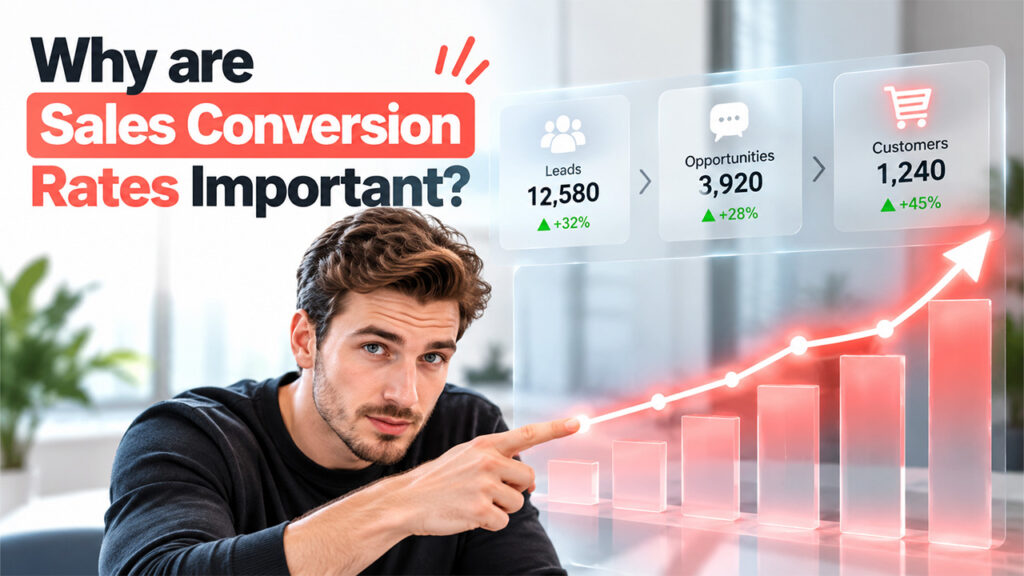
Sales conversion rates offer valuable insight into the efficiency of the business's sales process. The business may be generating a large volume of leads, but if only a small percentage of those become customers, increasing lead volume will not solve the revenue problem.
Some of the key factors why tracking conversion rate matters for businesses are:
- Measures Sales Effectiveness
Conversion rate enables businesses to understand how effectively the sales team moves prospects through the buying journey. If the team is generating a large volume of opportunities but closes only a few, the business may need to improve its sales pitch, qualification process, follow-up strategy, or objection handling.
- Helps Identify Problems in the Sales Funnel
The overall conversion rate can also reveal that something is going wrong between initial interest and purchase. Identifying these issues allows you to make targeted improvements instead of making random changes.
- It Helps Improve Marketing ROI
Improving conversion rates can increase revenue without requiring a proportional increase in marketing spending.
How to Calculate Sales Conversion Rate?
Sales conversion rate is calculated by dividing the number of converted leads by the total number of leads and multiplying it with 100.
Sales Conversion Rate = (Number of Converted Leads ÷ Total Number of Leads) × 100
For instance, if the company generated 800 leads in a month, and out of that, 64 leads became customers, then the sales conversion rates would be:
(64 ÷ 800) × 100 = 8%
Ways to Improve Your Sales Conversion Rates
Improving sales conversion rates is more about turning a larger percentage of existing prospects into paying customers. Some of the practical strategies that a business can follow to improve sales conversion rates are as follows:
- Focus on High-Quality Leads
Businesses should identify characteristics of customers who are most likely to become paying customers, such as their industry, budget, needs, company size, or buying intent. By focusing sales efforts on qualified prospects, the team can spend less time chasing unlikely buyers and more time engaging with people who are genuinely interested.
- Improving Lead Qualification Process
A strong qualification process enables sales representatives to quickly determine whether a prospect is a good fit. Businesses should consider key factors, such as does the prospect have a genuine need, whether they have the budget, whether they are involved in the purchasing decision, how soon they plan to buy, and whether the product or service solves their problem.
- Personalize Sales Communication
A generic sales message often fails to connect with the prospect. Personalizing the emails, calls, and presentations based on the industry, challenges, goals, and previous interactions of the prospect can help boost sales conversion.
- Follow Up Consistently
Consistent and timely follow-ups can help keep the business top of mind, while also giving prospects additional opportunities to ask questions.
How Technology Can Help Improve Conversion Rates
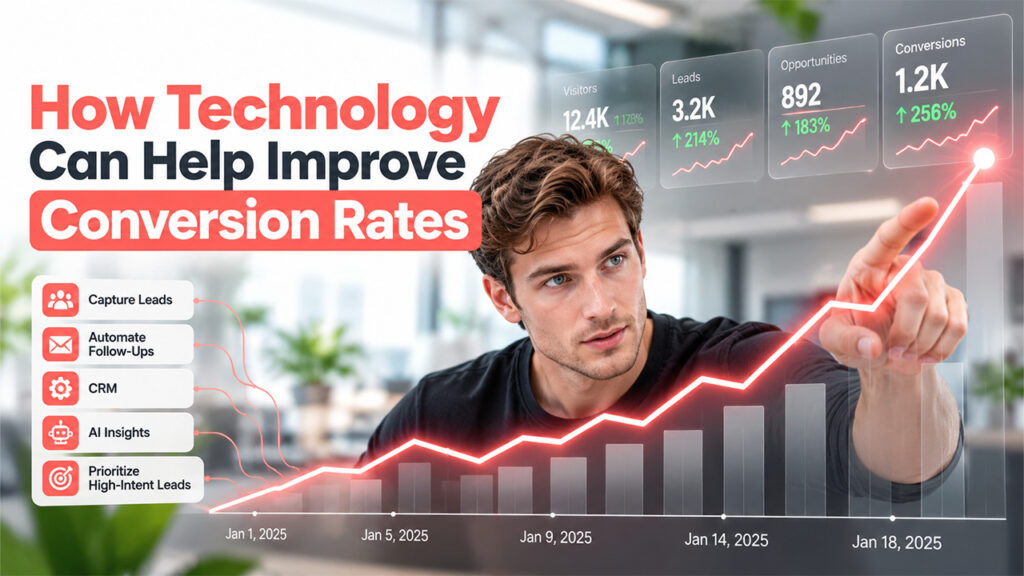
In the modern digital landscape, technology can make the sales processes faster, more organized, and more data-driven. With technology, businesses can use digital tools to understand prospects, prioritize opportunities, and engage customers at the right time, instead of relying on spreadsheets, manual follow-ups, or guesswork.
Some of the major ways technology can help improve sales conversion rates are as follows:
- Automate Lead Management
Sales technology can automatically capture and organize leads from different sources, including websites, forms, social media, and marketing campaigns.
- Utilize CRM Software
CRM software, such as CRM for sales teams, can offer sales representatives a centralized location to manage customer information, interactions, tasks, and deals. With the CRM platform, teams can also see where each prospect is in the buying journey and schedule timely follow-ups.
- Prioritize High-Intent Leads
Technology can enable teams to easily identify prospects that show stronger buying signals, such as repeatedly visiting a website, opening emails, requesting a demo, and interacting with the sales content.
- Automate Follow-Ups
Sales automation tools can help the sales team schedule reminders and send personalized follow-up emails based on various predefined actions and timelines. This allows salespeople to maintain consistent communication without manually tracking every interaction.
- Use AI to Support Sales Teams
AI Sales Tools can analyze customer and sales data to provide useful insights. Advanced technology, such as AI, can help businesses with lead scoring, email writing, conversation analysis, forecasting, and identifying potential opportunities.
Conclusion
Sales conversion rates provide valuable insights into how effectively a business turns prospects into paying customers. By regularly tracking conversion rates, identifying gaps in the sales funnel, improving lead qualification and follow-ups, personalizing communication, and leveraging technology, businesses can easily create a more effective and efficient sales process and drive sustainable revenue growth.
Frequently Asked Questions
What is a good sales conversion rate?
There is no universal benchmark for a good sales conversion rate. It varies based on factors such as industry, product type, pricing, sales cycle, lead quality, and target audience.
Why is the sales conversion rate important?
Sales conversion rate helps businesses evaluate sales performance, identify weaknesses in the sales funnel, improve marketing ROI, forecast revenue, and optimize their sales process.
How does lead quality affect sales conversion rates?
High-quality leads are more likely to have a genuine need, appropriate budget, and stronger purchase intent.
How does follow-up affect sales conversion rates?
Consistent and timely follow-ups help keep prospects engaged and give them opportunities to ask questions or address concerns.
%201.png)

%201.png)

%201.png)